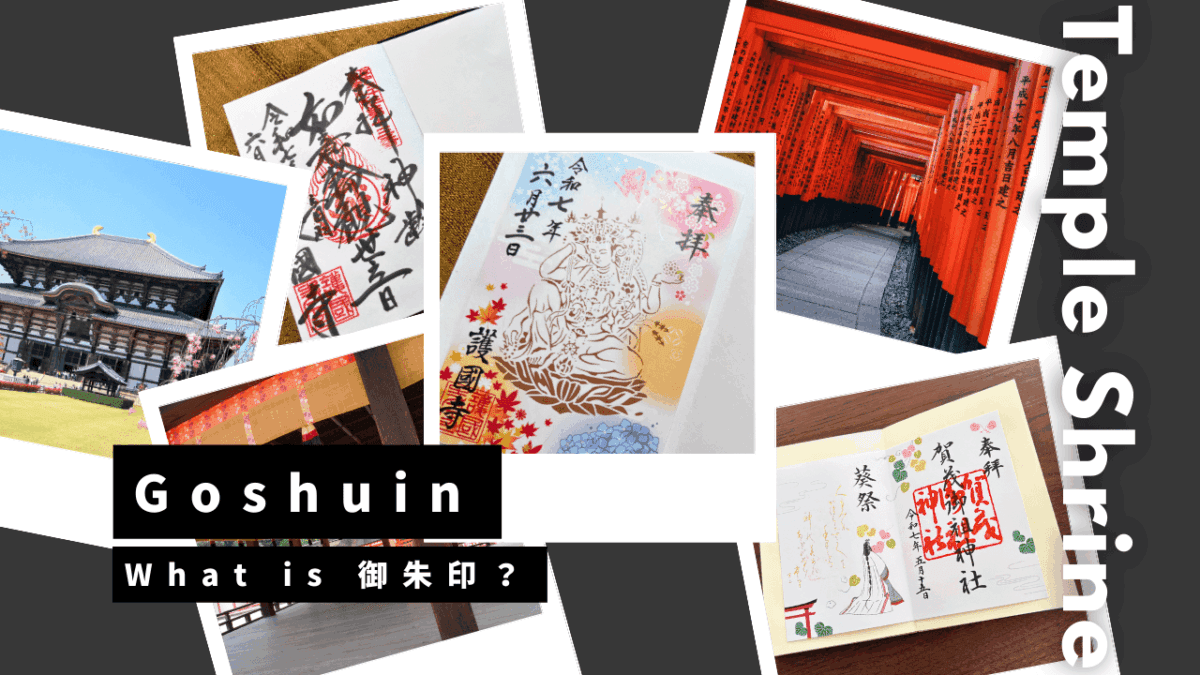
Many people enjoy collecting goshuin (temple or shrine stamps) when they visit shrines and temples in Japan. But do you know the original meaning behind goshuin?
- The Origins of Goshuin|From Sutra Offerings to Today’s Tradition
- Goshuin at Temples vs Shrines|Where the Practice Began
- Why Goshuin Matter|A Spiritual Symbol of Connection
- Shrine vs Temple Goshuin|Key Differences to Notice
- The Joy of Goshuincho (Stamp Books)
- Goshuincho Stamp Books|How to Start Collecting Beautiful Stamps
The Origins of Goshuin|From Sutra Offerings to Today’s Tradition

Goshuin actually started out as a kind of certificate called “nokyo-in,” given to people who copied Buddhist sutras and offered them to temples.
Even now, some temples still refer to it as nokyo-in.
Over time, though, it became more common to receive a goshuin just by visiting and praying, without offering a sutra.
Thanks to that, it’s now something many people can casually enjoy during their visits.
Goshuin at Temples vs Shrines|Where the Practice Began

These days, many people think of shrines when they hear the word goshuin, but it actually started at Buddhist temples. Shrines began offering goshuin later, around the Edo period (1603-1868).
Before that, it was mostly a tradition found in temples.
Why Goshuin Matter|A Spiritual Symbol of Connection
Receiving a goshuin is like a symbol of your connection to the deity or Buddha you prayed to. That’s why it’s important to always visit and say your prayers before asking for a goshuin.
Shrine vs Temple Goshuin|Key Differences to Notice
At shrines, the goshuin is usually written by a shinshoku (Shinto priest).It typically includes the name of the shrine or the deity, written in calligraphy, with red stamps like the shrine crest.
At temples, the goshuin usually features the name of the main deity, the temple’s official name (sansho or jigo), and often a red stamp with a Sanskrit character (Bonji) representing the Buddha.
Each one has its own unique charm—beautiful handwriting, interesting stamp designs—so it’s no wonder people love collecting them!
The Joy of Goshuincho (Stamp Books)

Goshuincho Stamp Books|How to Start Collecting Beautiful Stamps
To collect goshuin, you’ll need a goshuincho, or stamp book. You can now find them not only at shrines and temples, but also in big bookstores and stylish stationery shops.
However, some smaller, local shrines or temples might not sell them, so it’s a good idea to bring your own just in case.
Getting a goshuin is like making a promise—a record that you’ve made a spiritual connection with the deity or Buddha you visited.
So remember: always pray first, then ask for your goshuin.
These days, there are lots of cute and colorful designs to choose from too!
New to Shrine and Temples in Japan? Check this Etiquette Guide!