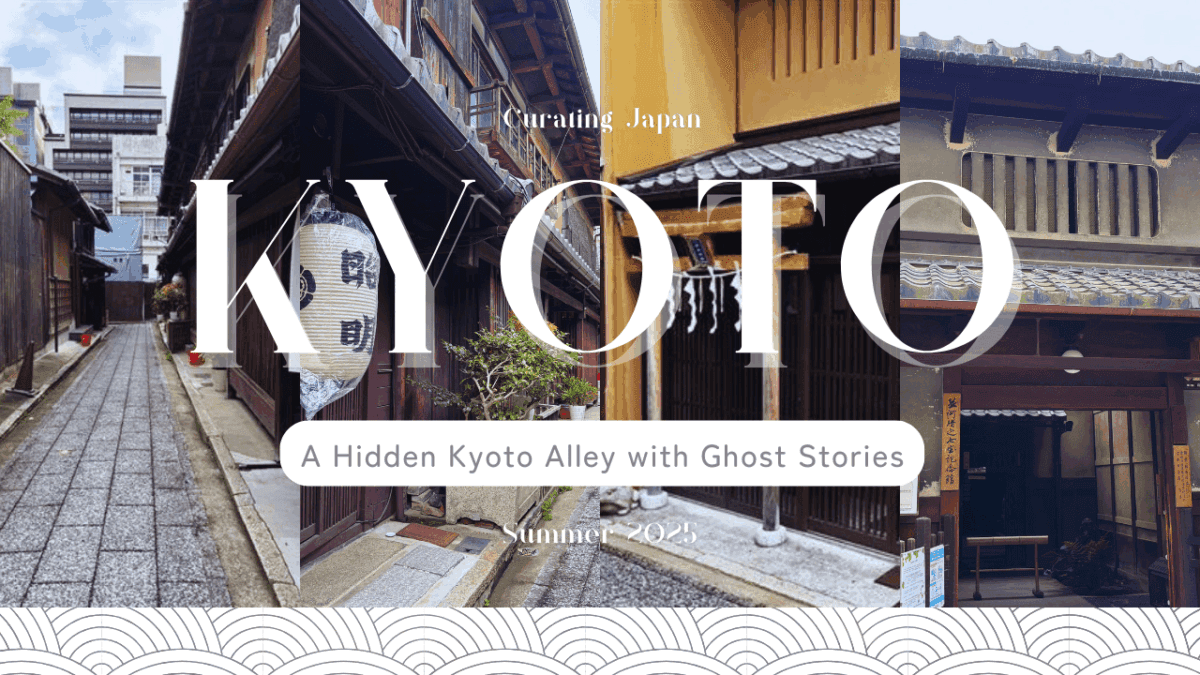
Explore Kyoto Kanda Myojin, a hidden shrine linked to Taira no Masakado and ghost legends. Discover Koyaku Zushi alley, eerie folklore, and Kyoto’s mysterious side.
When people hear “Kanda Myojin,” most think of the famous Tokyo shrine guarding the northeast approach to old Edo.
In Japanese feng shui and onmyodo (yin-yang cosmology), the northeast is known as the kimon—the “demon gate”—a direction through which evil spirits are said to enter. To protect the city, key temples and shrines like Kanda Myojin, Ueno’s Kan’eiji (northeast), and Hie Shrine and Zojoji (southwest) were strategically placed around Edo.
But did you know that there’s a Kanda Myojin in Kyoto too?
Kyoto Kanda Myojin|A Hidden Shrine in Downtown Kyoto
Tucked away in the quiet neighborhood of Shinkamanza-cho, Shimogyo Ward, Kyoto’s Kanda Myojin shares its name with its Tokyo counterpart but not its purpose.
Unlike the Edo version, this Kyoto shrine wasn’t built to ward off evil from a specific direction.
Its origins lie in a different, more haunting tale.
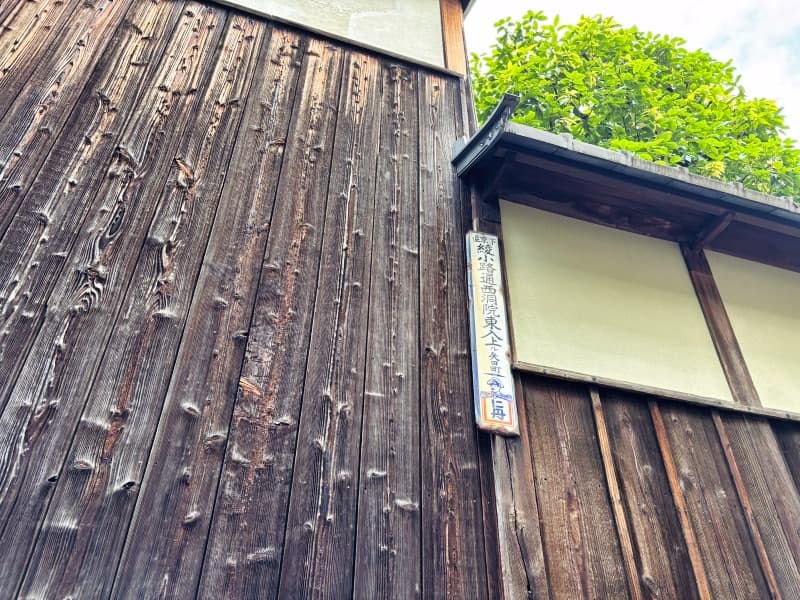
Kyoto Kanda Myojin and the Spirit of Taira no Masakado
During the mid-Heian period, government forces defeated the rebel warlord Taira no Masakado after he rose in revolt in eastern Japan. They carried his severed head to the capital, Heian-kyo (Kyoto), and displayed it at the Shichijo Riverbed as a warning.
Moved by the tragedy, the Buddhist monk Kūya—later revered as a saint of Pure Land Buddhism—built a small hall at the site to enshrine Masakado’s spirit.
This marked the beginning of Kyoto’s Kanda Myojin.
Kyoto Kanda Myojin Ghost Stories & Legends
Masakado is infamous as a “vengeful spirit” (onryō) in Japanese folklore.
In Tokyo’s Otemachi district, a mound known as Masakado-zuka is said to be the spot where his head flew back to reunite with his body.
Legend holds that any attempt to move or disturb the mound has led to disasters—lightning strikes, building fires, and unexplained misfortunes.
After Masakado’s head arrived in Heian-kyo, lightning and plagues reportedly swept through the city, feared as signs of his wrath.
Some believe that Kūya’s act of enshrinement was meant to appease the angry spirit and restore peace.
Kyoto Kanda Myojin|Muromachi-Era Alley “Koyaku Zushi”
Today, Kyoto’s Kanda Myojin is a small, humble shrine nestled in a narrow corner of the city.
Curiously, this area seems untouched by modern development—almost as if people were too afraid to disturb it.
The shrine faces a narrow lane called Koyaku Zushi (膏薬図子).
The word “zushi” (図子) is unique to Kyoto, referring to a thin pedestrian path that cuts between main streets—something like a secret passage. These differ from roji (dead-end alleyways), as zushi connect to throughways.
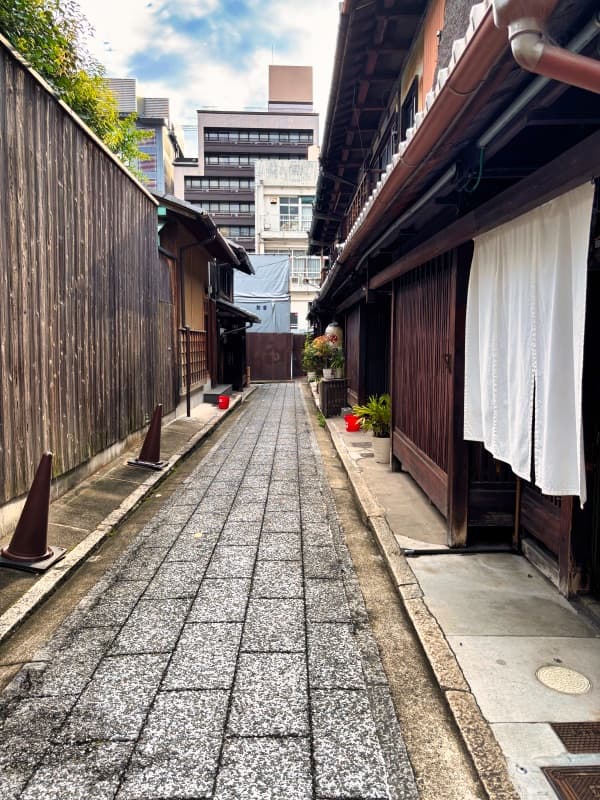
The name “Koyaku” likely evolved from “Kūya’s zushi,” the lane leading to the hall where Kūya enshrined Masakado.
Kyoto is full of beautifully named zushi streets: Tanaka Zushi, Ebisu Zushi, Donguri Zushi, and many more—each with its own charm and whisper of history.
Walking along these lanes lined with old-style wooden houses, you may feel a nostalgic sense of life from centuries ago—quiet, enduring, and full of stories.
Unlike busy tourist destinations, these paths offer a glimpse into the soul of Kyoto, preserved by both intention and fear of disturbing old spirits.
Why Getting Lost in Kyoto’s Hidden Paths Feels Magical
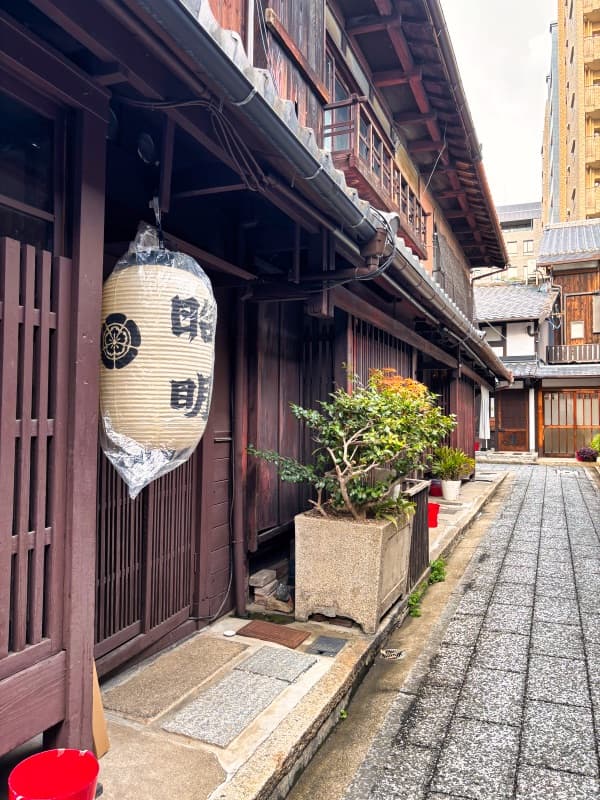
Next time you visit Kyoto, step off the beaten path.
Explore the hidden lanes and get lost on purpose.
Around one quiet corner, you just might find a forgotten piece of ancient Kyoto—and something unexpected waiting to be discovered.
If you plan to visit Kyoto Kanda Myojin, it’s also helpful to review basic Shrine & Temple Etiquette in Japan to ensure a respectful visit.

Kyoto Kanda Myojin Travel Tips & Access
| Item | Details |
| name | Kyoto Kanda Myojin |
| Location | 276, Shinkamanza-cho, Shimogyo-ku, Kyoto, 600-8471, Japan |
| Access | 5 min. walk from Exit 2 of Shijo Station on the municipal subway Karasuma Line. From Kyoto Station, 1 minute walk from Shijo Nishinotoin bus stop “No. 50 for Ritsumeikan Daigaku-mae”. |
| Approximate time required | Approx. 30 min. |
| Official Site | https://www.kandamyoujin.or.jp/event/detail/?id=29 (Listed in some of the links on the Kanda Myojin website in Tokyo) |
Please check the official website for the latest information.
Want to explore Kyoto more? Check our contents!