Discover dashi, Japan’s essential umami broth. Learn what dashi is, how it differs from stock, types like kombu & bonito, easy recipes, dishes it defines, and where travelers can taste or buy it in Japan.
- What Is Dashi? Japan’s Umami-Rich Soup Stock Explained
- Dashi vs Western Stock|How Japan’s Umami Differs from Bouillon
- Types of Dashi|Kombu, Bonito, Niboshi & Shiitake Broths
- How to Make Dashi|Simple Steps for Authentic Japanese Flavor
- Pro Tips|Ichiban & Niban Dashi and Sustainable Japanese Cooking
- Dashi in Japanese Cuisine|From Miso Soup to Oden & Rice Bowls
- Dashi Specialty Shops in Japan|Sip, Taste & Bring Home Umami
- Dashichazuke|Ochazuke with Dashi, a Must-Try Comfort Food
- Why Travelers Should Try Dashi|Discover the Heart of Japanese Umami
What Is Dashi? Japan’s Umami-Rich Soup Stock Explained
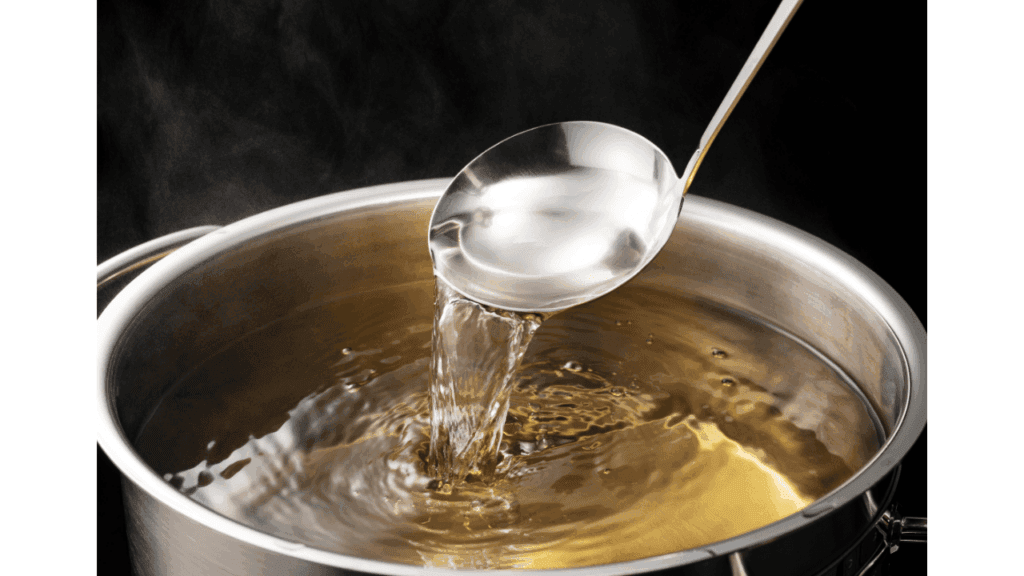
Dashi is the backbone of Japanese cuisine. In simple terms, it’s a clear soup stock that draws out umami. While Western cooking uses bouillon or stock, Japanese dashi is lighter, quicker to prepare, and relies on dried ingredients like kombu (kelp) and katsuobushi (bonito flakes). You’ll find it in miso soup, noodle broths, and countless other dishes.
Dashi vs Western Stock|How Japan’s Umami Differs from Bouillon
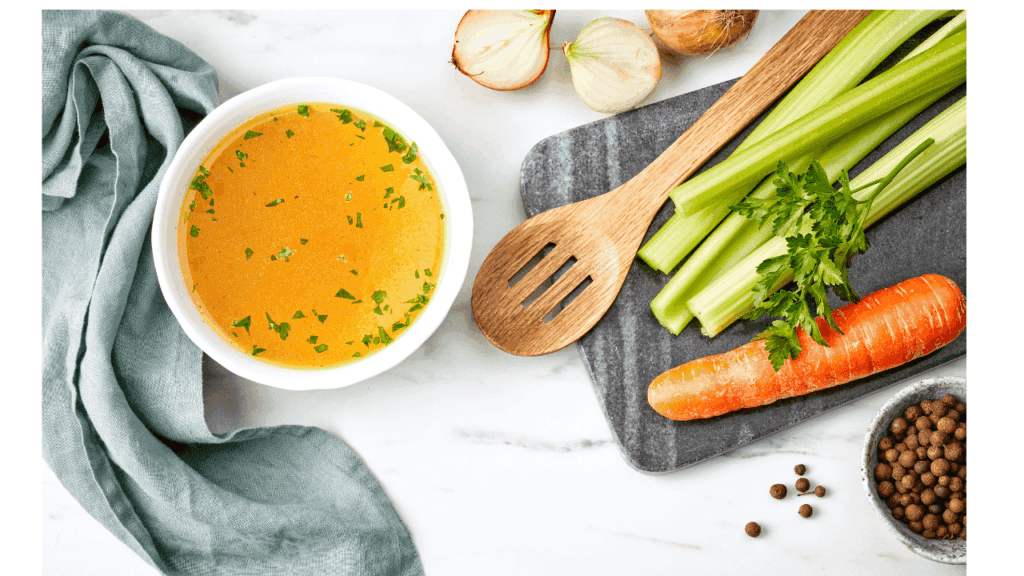
Bouillon or stock in Europe is made by simmering bones and vegetables for hours, creating a rich, layered flavor. Dashi, on the other hand, is prepared in just minutes. By briefly steeping kombu or katsuobushi, you get a clean, delicate broth that enhances the natural taste of ingredients instead of overpowering them.
Types of Dashi|Kombu, Bonito, Niboshi & Shiitake Broths
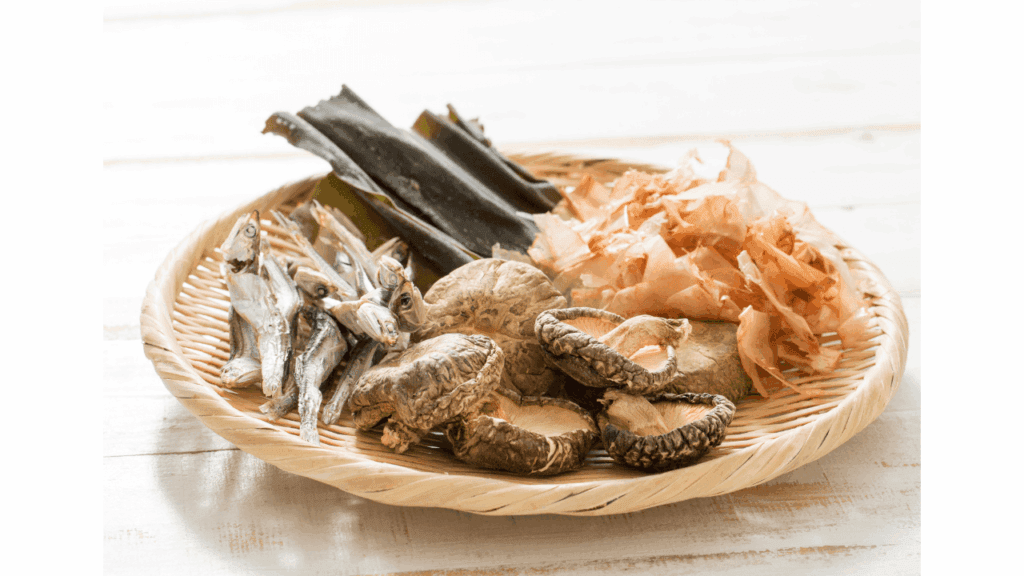
There are several types of dashi in Japan. Here are some examples!
- Kombu Dashi: mild and elegant flavor.
- Katsuobushi Dashi: smoky, bold, and aromatic.
- Awase Dashi: a balanced mix of kombu and bonito.
- Niboshi Dashi: dried sardines with rustic depth, often for miso soup.
- Shiitake Dashi: dried shiitake mushrooms with an earthy aroma, often in vegetarian cooking.
How to Make Dashi|Simple Steps for Authentic Japanese Flavor
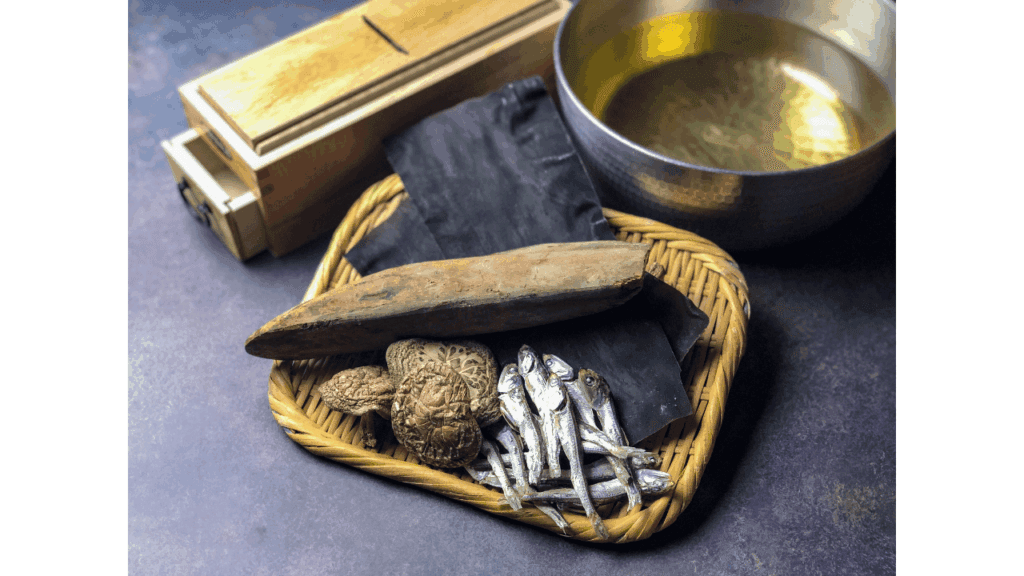
The classic awase dashi (kombu + bonito) is simple:
- Heat water with kombu, remove before it boils.
- Add bonito flakes and simmer for a few seconds.
- Strain gently, and you’re done!
In about 10 minutes, you’ll have a golden broth ready to use.
Pro Tips|Ichiban & Niban Dashi and Sustainable Japanese Cooking
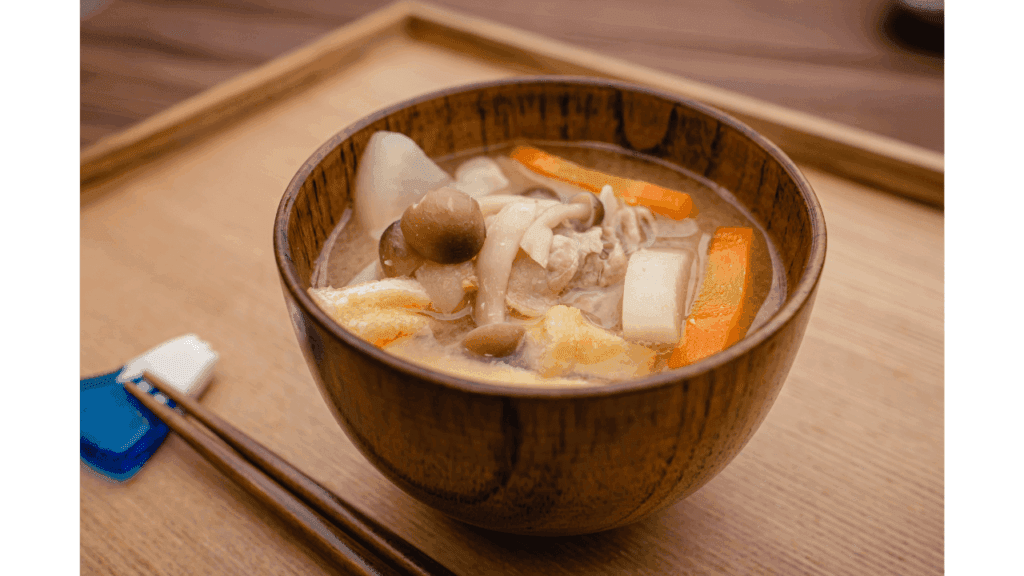
The flavor of dashi changes depending on the quality of ingredients and how you make it. Chefs often speak of:
- Ichiban Dashi (First Dashi): the initial extraction, light and clear, perfect for soups.
- Niban Dashi (Second Dashi): reusing the same kombu and bonito to create a stronger stock, great for miso soup or simmered dishes.
Nothing goes to waste—after making dashi, leftover kombu or bonito flakes are often turned into furikake (rice seasoning) or tsukudani (soy-simmered side dish). It’s not only delicious but also reflects Japan’s eco-conscious cooking style—something we’d call “sustainable” today.
Dashi in Japanese Cuisine|From Miso Soup to Oden & Rice Bowls
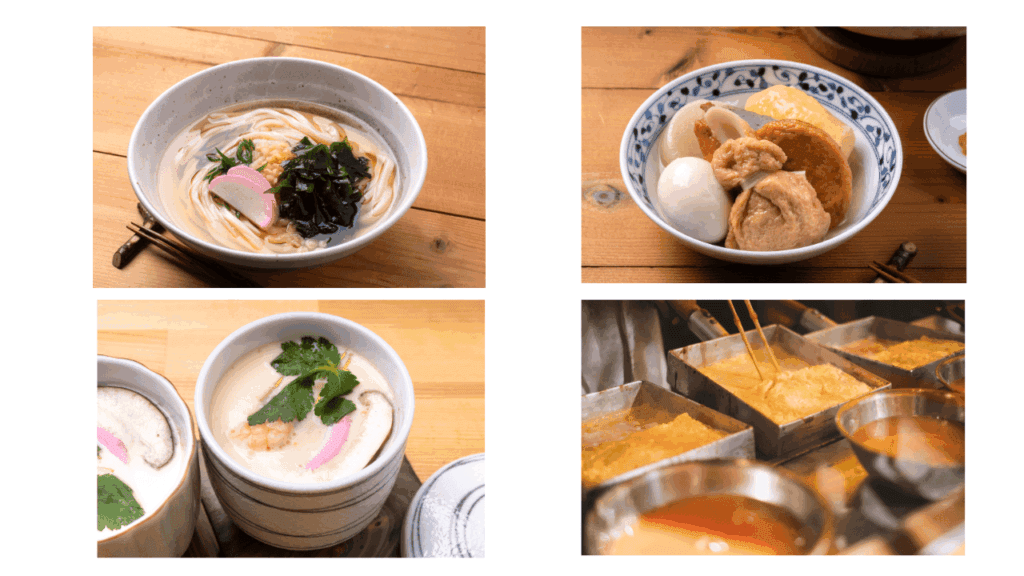
Dashi is everywhere in Japanese cuisine. From miso soup to noodle broths (udon, soba), winter oden, and delicate dishes like chawanmushi (savory egg custard) or dashimaki tamago (rolled omelet). Even simmered dishes like nikujaga (beef and potato stew) or donburi (rice bowls like katsudon) depend on it for their comforting flavor.
Dashi Specialty Shops in Japan|Sip, Taste & Bring Home Umami

In recent years, dashi-focused shops have gained popularity. Some let you sip freshly made dashi like tea, while others offer creative dishes highlighting its flavor. Many sell dashi in easy-to-use tea bag or powder form, perfect as a souvenir. You’ll also find instant packs and bottled dashi in supermarkets and department stores across Japan.
👉 For more ideas on what to bring home, see our article on Japanese Souvenirs!

Dashichazuke|Ochazuke with Dashi, a Must-Try Comfort Food
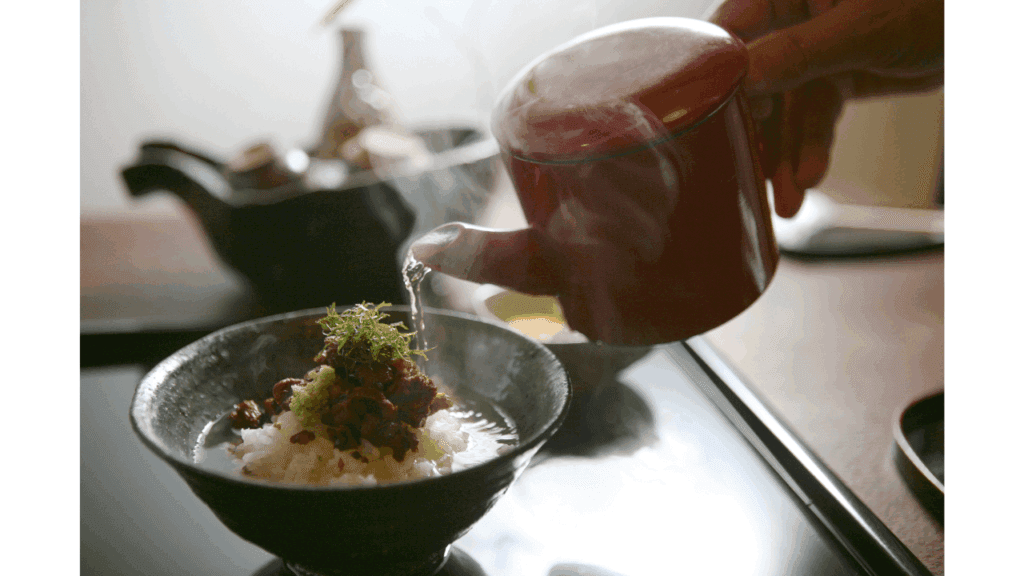
One of the simplest yet most satisfying ways to enjoy dashi is ochazuke with dashi, also called dashichazuke in Japanese. Pour hot dashi over a bowl of rice topped with grilled fish, pickles, or other toppings, and enjoy it light and refreshing. Try it at a specialized ochazuke shop in Japan, or make your own at home with your favorite toppings.
Popular toppings range from salmon, umeboshi (pickled plum), mentaiko (spicy cod roe), to kombu and nori. It’s gentle on the stomach, making it perfect for when you’re not feeling hungry or after a night out.
📌 Regional Ochazuke Variations
- Keihan (Kagoshima): rice topped with chicken, egg, shiitake, and pickles, finished with chicken dashi.
- Tai Chazuke (Ehime/Uwajima, Fukuoka): fresh sea bream marinated in soy or sesame sauce, served over rice with hot dashi.
- Hitsumabushi (Nagoya): chopped grilled eel over rice, eaten three ways: plain, with condiments, and finally with dashi poured over.
Why Travelers Should Try Dashi|Discover the Heart of Japanese Umami

Dashi may not be as flashy as sushi or tempura, but it’s the quiet star of Japanese cuisine. That subtle flavor you notice in miso soup or noodles? That’s dashi.
The best part is you can also take it home—instant packs and powdered dashi are widely available in shops. By tasting and understanding dashi, you’ll discover how Japanese people value “umami” and how this simple broth shapes the heart of their food culture.