
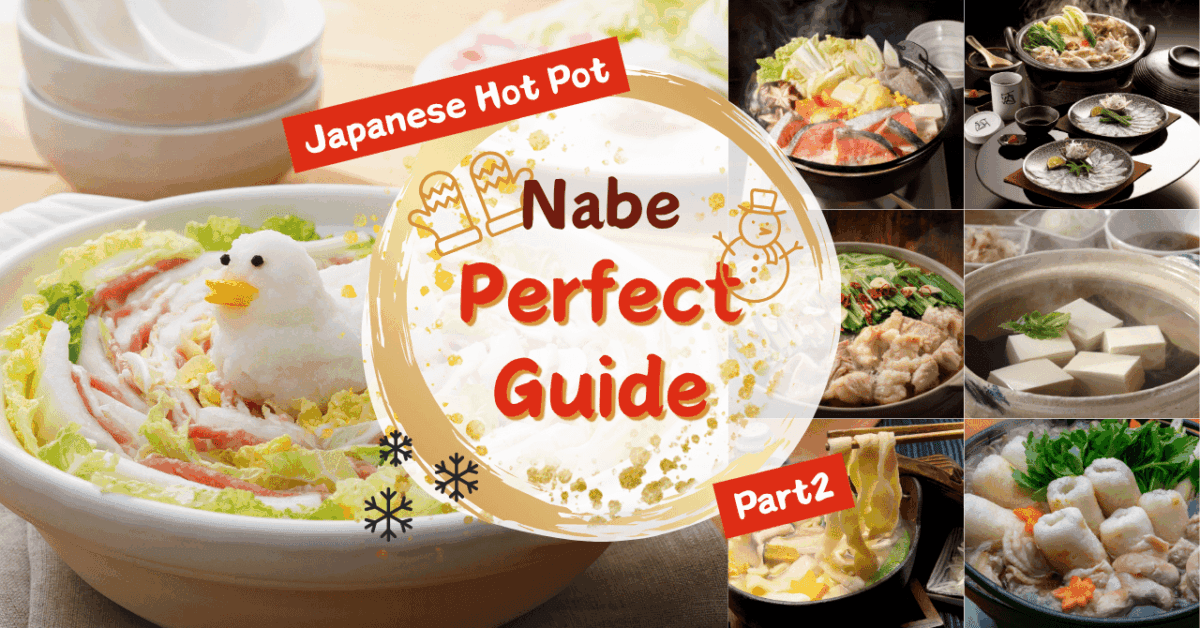

Japan’s hot pot culture has evolved alongside each region’s climate, local specialties, geography, and history.
From wisdom for surviving harsh winters to clever ways of using the sea and mountain harvests, regional hot pots (local nabe dishes) capture the unique flavor and culture of each place.
Here are 15 must-try regional hot pots to seek out when you travel from Hokkaido to Kyushu.
You have not read part 1? Check now!

- Ishikari Nabe (Hokkaido)
- Kiritanpo Nabe (Akita)
- Senbei-Jiru (Aomori)
- Imoni (Yamagata, Niigata, etc.)
- Anko Nabe (Ibaraki)
- Houtou Nabe (Yamanashi)
- Botan Nabe (Hyogo)
- Kamo Nabe (Kyoto)
- Yudofu (Kyoto)
- Kani Nabe (Hokuriku & San’in Coast)
- Fugu Nabe / Tecchiri (Yamaguchi & Kansai)
- Kaki no Dotenabe (Hiroshima)
- Imotaki (Ehime)
- Mizutaki (Fukuoka)
- Motsu Nabe (Fukuoka)
- Conclusion|Taste a Bowl of Local Warmth
Ishikari Nabe (Hokkaido)

A signature winter dish of Hokkaido.
Born along the Ishikari River, salmon and vegetables are simmered in a miso-based broth.
Modern twists sometimes add butter or milk for extra richness—the perfect way to taste Hokkaido’s winter seas.
You’ll find it at izakaya in Sapporo and Otaru and on ryokan dinner menus.
Kiritanpo Nabe (Akita)

A beloved Akita specialty: grilled rice sticks (kiritanpo) simmered in savory broth made from Hinai chicken.
Burdock, maitake mushrooms, and seri (Japanese parsley) add aroma and depth for a wholesome, comforting taste.
Several spots in Akita City offer hands-on kiritanpo-making experiences.
Senbei-Jiru (Aomori)

From the Hachinohe area of Aomori: wheat crackers (senbei) simmered with chicken and vegetables.
They soak up the dashi and turn pleasantly chewy—rustic, local comfort food for cold days.
Imoni (Yamagata, Niigata, etc.)

An autumn tradition across northern Japan.
Taro and beef are simmered in soy-sauce broth (variants use pork or miso) and shared at riverside “Imoni-kai” gatherings.
A warming pot that symbolizes community—locals literally meet outdoors around a huge kettle.
Anko Nabe (Ibaraki)

Ibaraki’s winter favorite stars anglerfish (anko) simmered with vegetables in a miso broth enriched with its creamy liver.
Collagen-rich and deeply savory, it’s a seasonal highlight—especially around Oarai’s Anko Festival.One of the highlights of this dish is the unique cooking method known as “hangarikiri.
Houtou Nabe (Yamanashi)

Thick, flat noodles stewed with pumpkin, taro, and seasonal vegetables in miso soup.
Born as farmhouse fare, it’s now a visitor favorite in Kofu and the Fuji Five Lakes—perfect after hiking in cool weather.
Botan Nabe (Hyogo)

A classic mountain nabe with wild boar.
Thin slices are arranged like a peony (botan) flower, then simmered in miso broth with cabbage, leeks, and konnyaku—robust, rustic, and full of countryside charm.
The name comes from the way the meat is arranged on a plate like a peony (botan) flower.
Some eateries serve it fireside around an irori hearth.
Kamo Nabe (Kyoto)

Duck and Kyoto’s famed Kujo green onions are gently simmered in clear dashi.
Elegant yet flavorful—the essence of Kyoto’s winter dining.
Finish with soba to enjoy it Kamo-Nanban style.
Duck is in season in winter, prized for tender, gently fatty meat.
Yudofu (Kyoto)

A refined, minimalist hot pot: tofu warmed in kombu broth and enjoyed with ponzu or sesame sauce plus simple condiments.
Quietly flavorful, it showcases tofu at its best.Yudofu specialists near Nanzen-ji and Kiyomizu-dera are winter staples; many offer vegetarian/vegan options.
Kani Nabe (Hokuriku & San’in Coast)

Japan Sea luxury in a pot—snow crab (Echizen, Matsuba, Kinosaki) cooked in clear dashi.
A touch of crab miso melted into the broth boosts umami; finish with rice porridge or udon to savor every drop.
Coastal onsen towns like Kinosaki, Kasumi, and Mikuni serve full crab courses in winter.
Fugu Nabe / Tecchiri (Yamaguchi & Kansai)

A refined nabe of pufferfish gently simmered in kombu broth.
Delicate, sweet flesh pairs perfectly with tangy ponzu; end with a soothing rice porridge
Shimonoseki (Yamaguchi) and high-end spots in Osaka are famed for fugu in winter.
Kaki no Dotenabe (Hiroshima)

Hiroshima’s oyster hot pot: miso is spread along the rim like a “dote” (embankment) and mixed in as it cooks.
Plump oysters and rich, savory broth make a perfect match for local sake.
Kaki-goya (oyster huts) and izakaya across Hiroshima serve oyster feasts in winter.
Imotaki (Ehime)

Ehime’s autumn-to-winter comfort nabe.
Taro, chicken, konnyaku, mushrooms, and leeks simmer in a gently sweet soy broth.
Said to have started in Ōzu City; locals hold riverside imotaki parties, gathering around big pots under the night sky.
It’s the very picture of Japanese togetherness—and a fun seasonal event for visitors, too.
Mizutaki (Fukuoka)

A silky, milky chicken broth simmered for hours forms the base of Fukuoka’s classic nabe.
Chicken, tofu, and vegetables are cooked at the table and dipped in ponzu.
Many Hakata restaurants serve mizutaki as a course—sip the broth first, then add the ingredients.
Motsu Nabe (Fukuoka)

A hearty Hakata original: beef or pork offal simmered with cabbage, garlic, and chives in soy, miso, or salt broth.
Born from post-war food stalls, it’s now a national favorite.
Finish with chanpon noodles or rice to enjoy every bit of the umami-rich soup.
Conclusion|Taste a Bowl of Local Warmth

Regional nabe reflects each area’s climate, culture, and everyday life.
Try a local hot pot on your winter trip and you’ll discover a side of Japan that sightseeing alone can’t show.
To learn the basics of nabe and classic styles, see
👉 Japanese Hot Pot Guide (Part 1)|Yosenabe, Sukiyaki, Shabu-Shabu & Oden.


