Graceful yet powerful, Mt. Fuji (Fujisan) is the mountain that defines Japan.
Whether glimpsed from a Shinkansen window or rising above the clouds near Lake Kawaguchi, its perfect cone seems almost unreal.
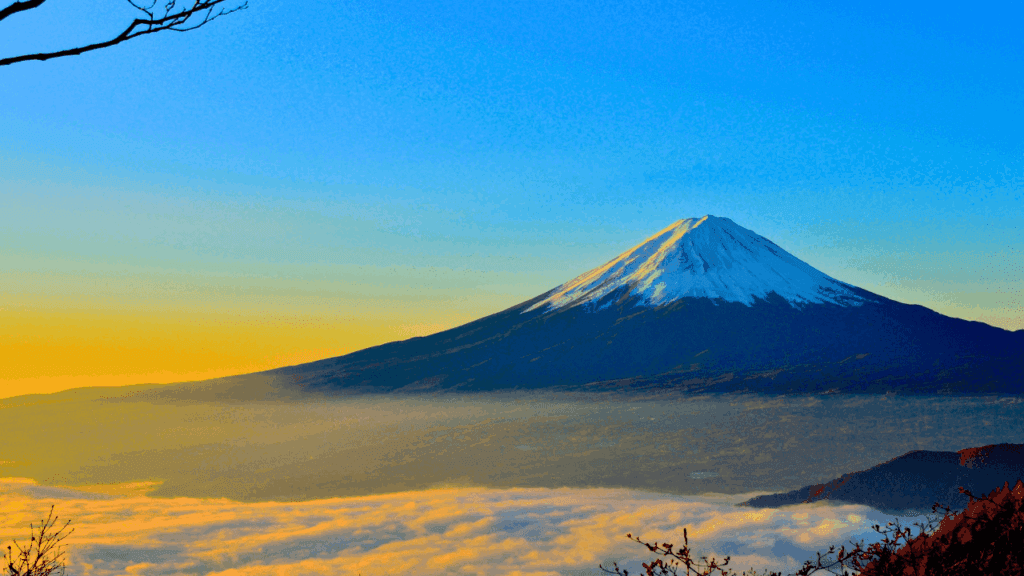
Designated a UNESCO World Cultural Heritage Site in 2013, Mt. Fuji is far more than a tourist attraction.
For Japanese people, it has long been a spiritual companion—a symbol of purity, harmony, and quiet strength.
This guide introduces Mt. Fuji’s essential facts, how to reach it, and—more uniquely—what it means to “see” the mountain: when it appears, when it hides, and how its form changes with the seasons.
1. Basic Facts about Mt. Fuji
Location: Border of Shizuoka and Yamanashi Prefectures
Height: 3,776 m / 12,388 ft – Japan’s highest peak
Type: Stratovolcano formed by repeated eruptions about 100,000 years ago
UNESCO Listing: “Fujisan – Sacred Place and Source of Artistic Inspiration” (2013)
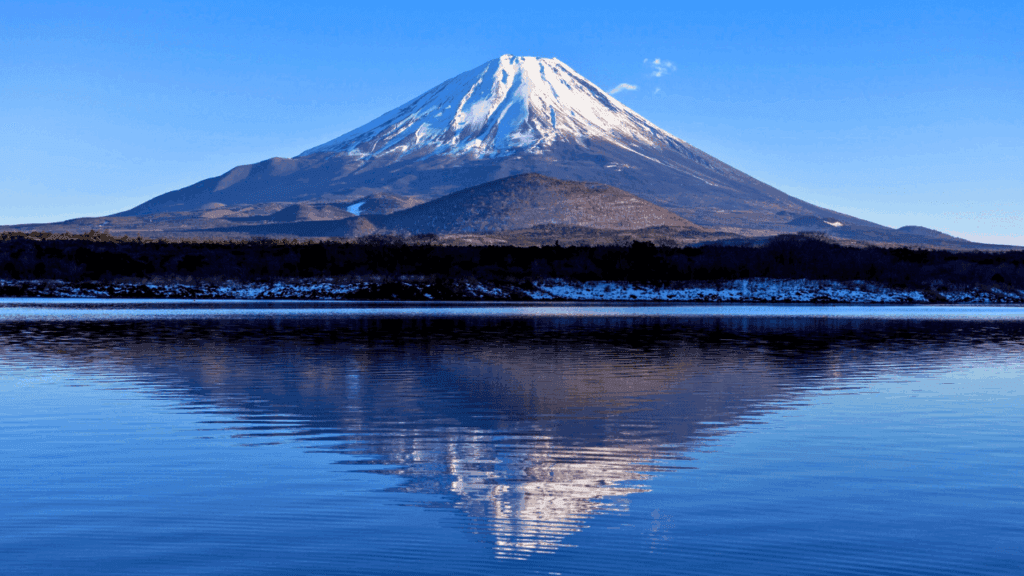
Its near-perfect symmetry has inspired artists, poets, and pilgrims alike for over a millennium—earning it the affectionate title Reihō (“Sacred Peak”).
2. How to Get There
Fuji is within a day trip distance from Tokyo.
From Tokyo
- Train – Limited Express from Shinjuku to Fujisan Station (≈ 2 h)
- Bus – Shinjuku Bus Terminal to Lake Kawaguchi (≈ 2 h 30 min)
- Car – Via Chūō Expressway (≈ 2 h)
From Nagoya
- Shinkansen to Mishima Station (≈ 1 h) → Bus or rental car to Fujinomiya
From Osaka
- Shinkansen to Shin-Fuji Station (≈ 3 h) → Bus to Fujisan Hongū Sengen Taisha or 5th Station
Popular bases are the Lake Kawaguchi area (Yamanashi side) and the Fujinomiya area (Shizuoka side)—both offering onsen resorts, cafés with mountain views, and tranquil scenery away from the city rush.
After exploring Mt. Fuji, take a short trip west to Kakegawa, a peaceful castle town in Shizuoka.
Surrounded by tea fields and historic streets, it offers a relaxing day of craft beer, matcha, and quiet local charm—a perfect way to slow down after your Fuji adventure.
👉 Why You’ll Love Kakegawa|A Relaxing Day of Beer, Castles & Matcha in Japan

3. The Visible and Invisible Fuji
Mt. Fuji isn’t always visible—even when you’re standing near its base.
On a crisp winter morning in Tokyo, locals smile when they suddenly spot it between skyscrapers.
Yet travelers who drive hours to Lake Kawaguchi may find nothing but clouds.
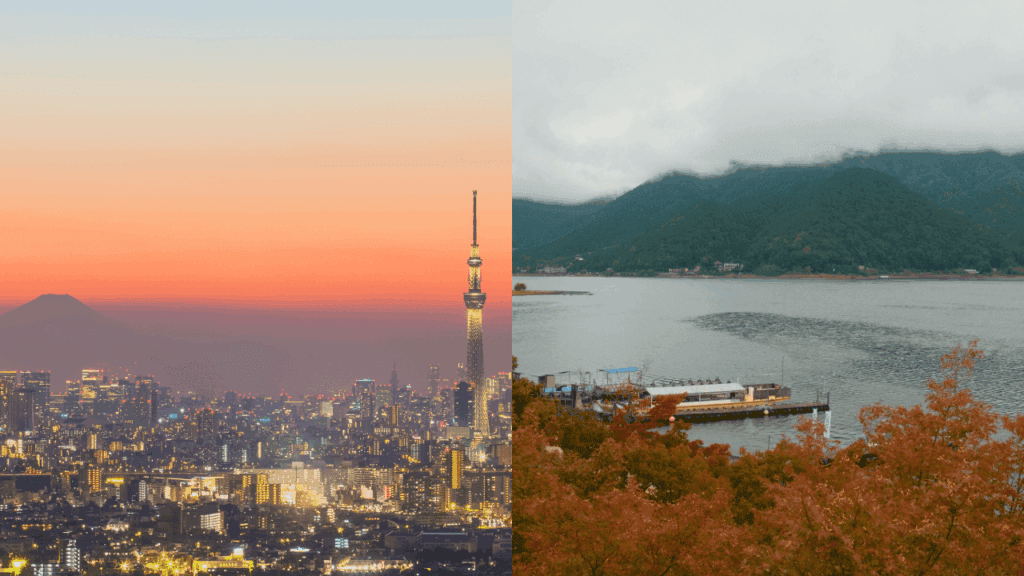
According to the Japan Meteorological Agency, the mountain can be clearly seen only about 80–120 days a year.
Visibility rates:
- Winter (Dec–Feb): 70–80 % — best chance
- Summer (Jul–Sep): ≈ 30 % — often hidden by humidity and clouds
This unpredictability makes Mt. Fuji feel alive—something you don’t simply “visit” but rather encounter by chance.
That brief, clear moment feels like meeting an old friend after a long absence—a fleeting connection between people and nature.
4. Mt. Fuji through the Seasons
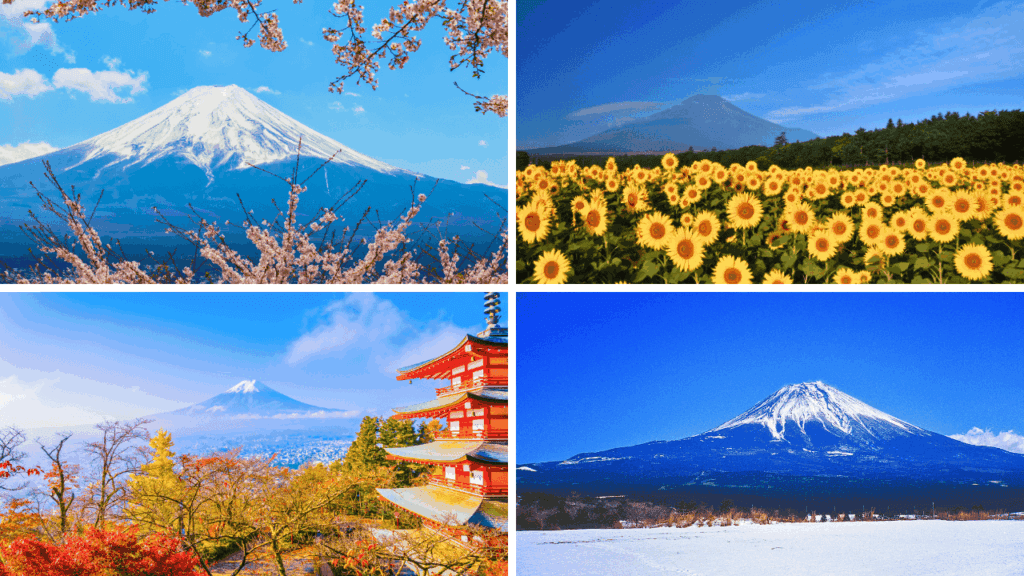
Each season transforms the mountain’s face and mood, reflecting Japan’s deep sense of seasonal beauty.
🌸 Spring – Blossoms and Snow Caps
When cherry blossoms bloom around its base, snow still crowns the summit.
The view from Arakurayama Sengen Park—five-storied pagoda, pink petals, and Fuji beyond—is a global icon of Japanese spring.
☀️ Summer – The Climbing Season
Trails open in early July, revealing lush green slopes and dramatic cloud belts.
At the 5th Station, cool air and shifting mist create a sense of a living mountain.
Clouds are frequent, so each clear moment feels precious.
🍁 Autumn – Red Leaves and Crystal Air
Dry air and high visibility make this the most photogenic season.
Around the Fuji Five Lakes, the mountain mirrors perfectly on the water’s surface—the famed “Upside-Down Fuji.”
❄️ Winter – Sacred Stillness
Skies are at their clearest. At dawn or sunset, the snowy summit glows pink or gold.
Even from Tokyo or Kamakura, you can often see Fuji shining above the horizon—a quiet gift of winter.
5. Why Mt. Fuji Matters to the Japanese
A Sacred Mountain
For centuries, Mt. Fuji has been worshiped as the dwelling place of deities.
Shrines called Sengen Taisha dot its foothills, where people pray for safety and fertility.
During the Edo period, commoners formed pilgrimage groups known as Fujikō, climbing the mountain as a spiritual act.
A Muse for Art and Imagination
From Hokusai’s Thirty-Six Views of Mount Fuji to modern photography and anime, the mountain continues to inspire countless artists seeking their own version of Fuji.
A Symbol of Hope and Good Fortune
At New Year, many Japanese watch the first sunrise (hatsuhinode) with Mt. Fuji in view.
The traditional saying “Ichi-Fuji Ni-Taka San-Nasubi” (一富士二鷹三茄子)—literally “First Fuji, Second Hawk, Third Eggplant” — lists the three luckiest images to see in your first dream of the year.

Each represents a virtue:
- Fuji: great achievement and rising success (“Japan’s No. 1”)
- Hawk: ambition and noble spirit
- Eggplant: wordplay on nasu (“to accomplish”), symbol of prosperity
Together they express the Japanese wish to begin the year with aspiration and fulfillment—proof that Mt. Fuji is not only a landmark but a bearer of hope.
6. Before You Go
- Climbing Season: Early July – Early September (Closed outside this period)
- Temperature Range: 0 – 5 °C at the summit even in summer
- Weather: Conditions change quickly—check forecasts before you go
- Clothing: Layered outfits, warm jackets, and rain gear are essential
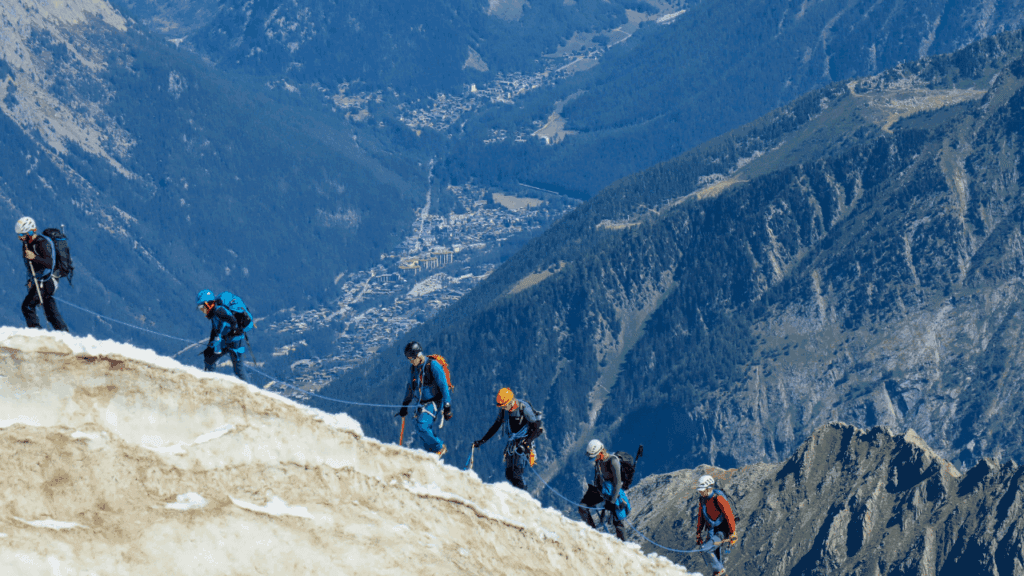
For details on routes and safety, see our next article:
→ Climbing Mt. Fuji and Exploring the Surrounding Area | A Journey to Feel Japan’s Sacred Mountain
Conclusion
Mt. Fuji is not just something to see — it’s something to encounter.
When it appears from behind the clouds, you feel a moment of quiet connection—between earth and sky, between travel and home.
That is why for centuries, the Japanese have said: “Fuji is always there, whether we see it or not.”
May you find your own Fuji — the one that appears when you least expect it.
→ Next Article: ” A Complete Guide to Climbing Mt.