Japan’s traditional performing arts are more than stage performances.
They reflect centuries of rituals, beliefs, aesthetics, and everyday life, passed down through generations.
At first glance, they may seem difficult or language-dependent.
However, many of these arts are designed to be felt rather than fully understood, making them surprisingly accessible—even for first-time visitors to Japan.
This guide introduces the major forms of Japanese traditional performing arts, explains what makes each one unique, and shows where and how you can actually watch them during your trip.
Which Japanese Traditional Art Is Right for You?
A Quick 1-Minute Guide
You don’t need to understand everything at once.
Start with the art that best matches your travel style and curiosity.
Q1. What kind of experience are you looking for?
A. Quiet, spiritual, and atmospheric
B. Visually engaging and entertaining
→ A: Go to Q2 / B: Go to Q3
Q2. Can you enjoy silence, space, and subtle movement?
A. Yes, I enjoy calm and contemplation
B. I prefer some humor or clearer action
→ A: Noh / B: Kyogen
Q3. How much time do you have during your trip?
A. Limited time, between sightseeing
B. I have time for a longer cultural experience
→ A: Kabuki / B: Go to Q4
Q4. What draws you in more?
A. Emotional stories and human drama
B. Rhythm, movement, and energy
→ A: Bunraku / B: Kagura or Taiko
| Your Preference | Recommended Traditional Art |
|---|---|
| Seeking calm and spiritual depth | Noh |
| Curious about Japanese humor | Kyogen |
| First-time experience or limited time | Kabuki |
| Interested in deep emotional stories | Bunraku |
| Prefer dynamic, energetic performances | Kagura / Taiko |
Noh: The Beauty of Stillness and Spirit
What is Noh?
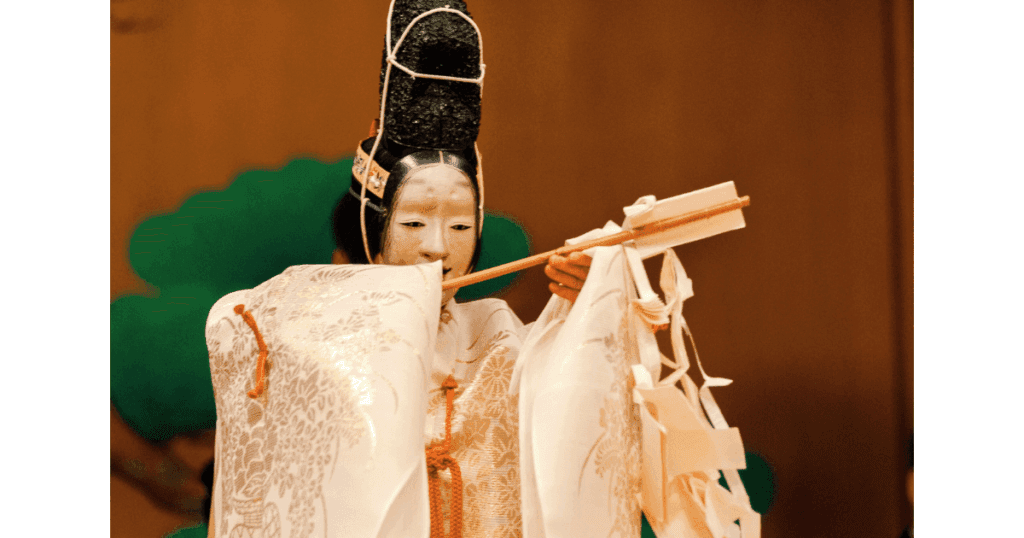
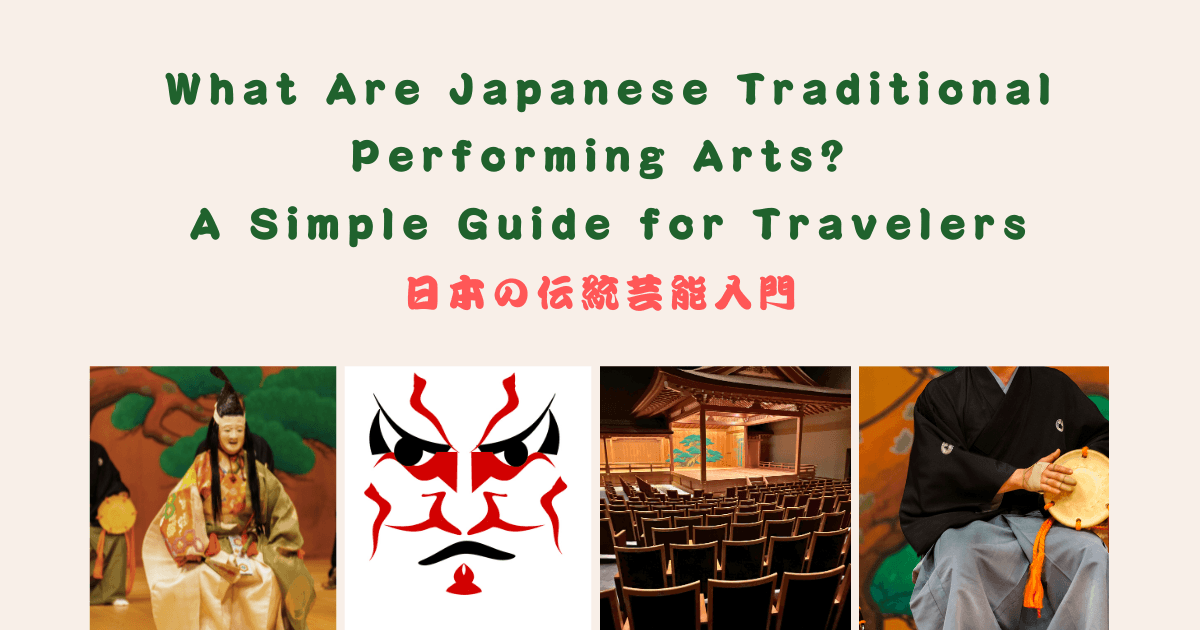
Noh is one of Japan’s oldest theatrical traditions, refined in the 14th century and closely associated with samurai culture.
Rather than dramatic action, Noh emphasizes stillness, symbolism, and emotional restraint.
Performers wear carved wooden masks and move slowly across a minimalist stage.
Stories often involve spirits, gods, or memories of the past, inviting the audience to reflect rather than react.
How to Watch Noh
Noh performances are held at dedicated Noh theatres throughout Japan, as well as on traditional Noh stages located within shrines and temples.
In major cities, theatres offer regular performances, while regional performances are sometimes presented as part of festivals or special ceremonies.
As schedules and venues vary by season, checking the official websites in advance is recommended.
Buy Tickets
- Official website of each venue
- Japanese play guides (e+, Ticket Pia, etc.)
Do I need to make a reservation?
Advance reservations are recommended for regular performances. Same-day tickets are available if seats are available.
Points for Foreigners
Performances with English subtitles and performances with advance commentary are available for beginners.
Kyogen: Laughter from Everyday Life
What is Kyogen?
Kyogen developed alongside Noh as its comic counterpart.
While Noh is poetic and serious, Kyogen focuses on human weakness, misunderstandings, and humor.
The stories are simple and physical, often exaggerated through gesture and movement.
Even without understanding Japanese, audiences frequently find themselves laughing naturally.
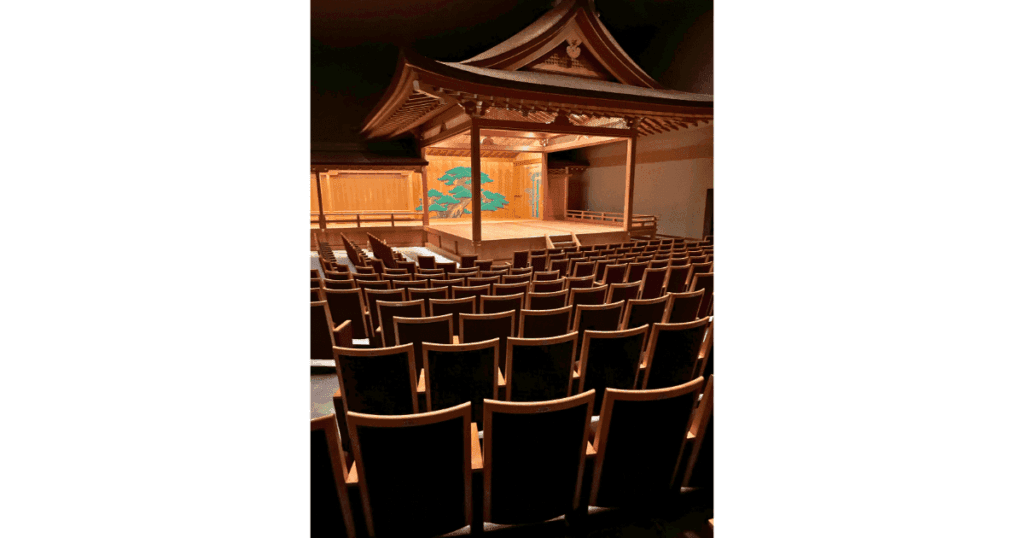
How to Watch Kyogen
Main venues: Noh theatres and the *National Theatre (Tokyo)
Tickets: Theatre websites
Reservation: Recommended for popular performances
Duration: Short and easy to fit into a sightseeing schedule
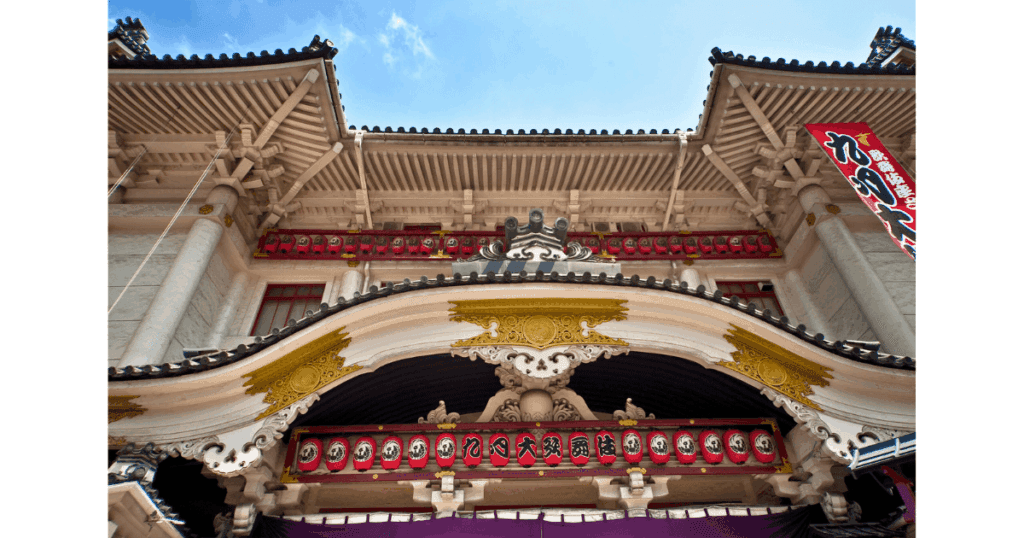
Kabuki: Japan’s Most Accessible Traditional Theatre
What is Kabuki?
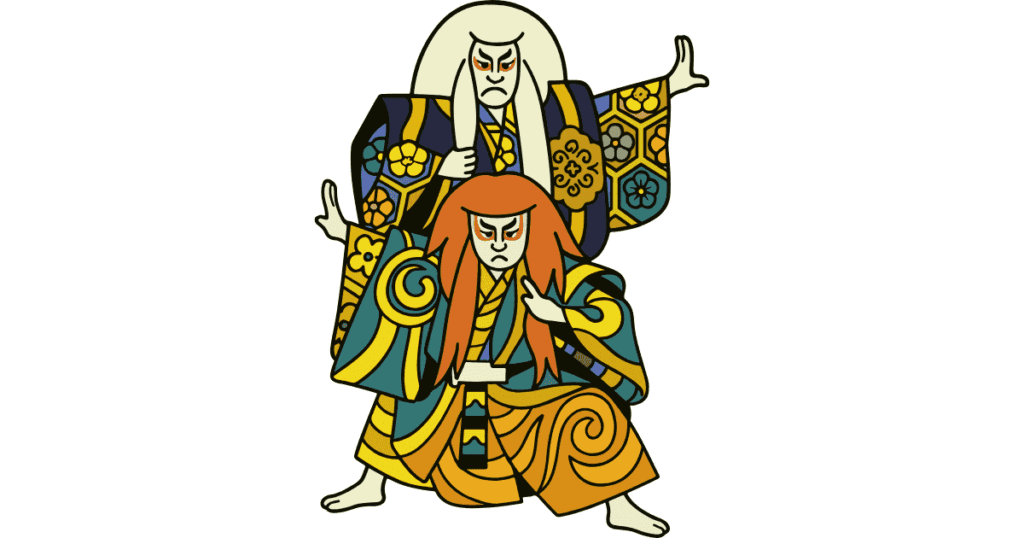
Kabuki emerged in the 17th century as popular entertainment for townspeople.
It is visually bold, emotionally expressive, and rich in theatrical effects.
Expect elaborate costumes, striking makeup (kumadori), dramatic poses, and dynamic stage mechanisms.
For first-time visitors, Kabuki is often the easiest and most enjoyable introduction to Japanese traditional theatre.
How to Watch Kabuki
Main venues:
Tickets: Official theatre websites or same-day counters
Reservation: Strongly recommended
Beginner tip: Single-act tickets are available
English support: Excellent audio guides in English
Bunraku: When Puppets Feel Human
What is Bunraku?
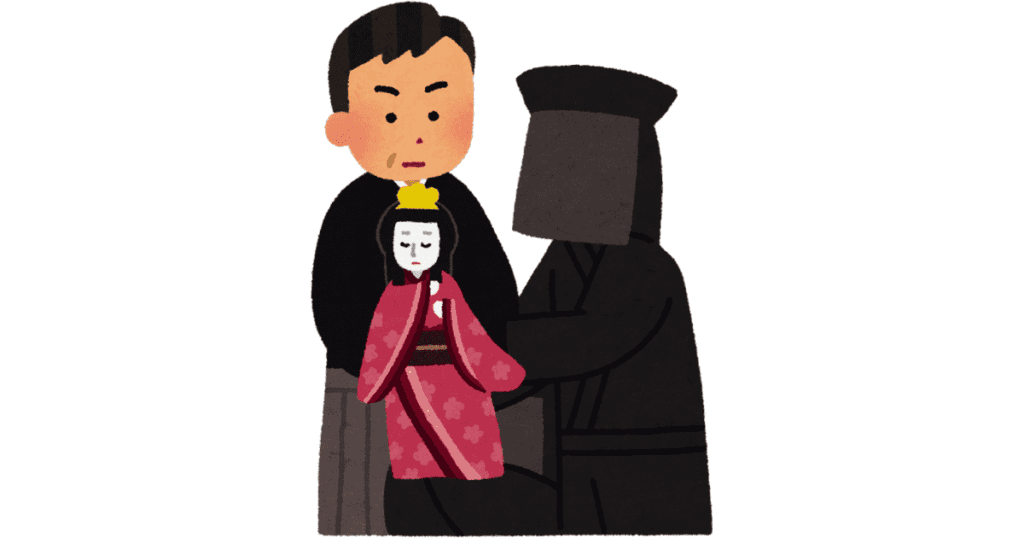
Bunraku is a highly refined form of puppet theatre developed in Osaka during the Edo period.
Each puppet is operated by three puppeteers, while a narrator and shamisen musician perform the entire story.
At first, the mechanics are visible.
But gradually, the puppets begin to feel emotionally alive, drawing the audience deeply into the narrative.
How to Watch Bunraku
Main venues:
- National Bunraku Theatre (Osaka)
- National Theatre (Tokyo, limited seasons)
Tickets: Official theatre websites
Reservation: Almost essential due to limited performances
English support: Audio guides and beginner programs available
Note: The National Theatre of Japan is currently closed for renovation. However, its official productions continue to be held at alternative venues in Tokyo and other locations. Please check the official website for the latest schedules and venues.
Kagura: Sacred Dance Rooted in Myth
What is Kagura?
Kagura is a ritual dance performed to entertain the gods, making it one of Japan’s oldest performing traditions.
Based on Shinto mythology, Kagura performances vary widely by region.
Some styles, such as Iwami Kagura in western Japan, are powerful, dynamic, and visually striking—perfect for first-time viewers.
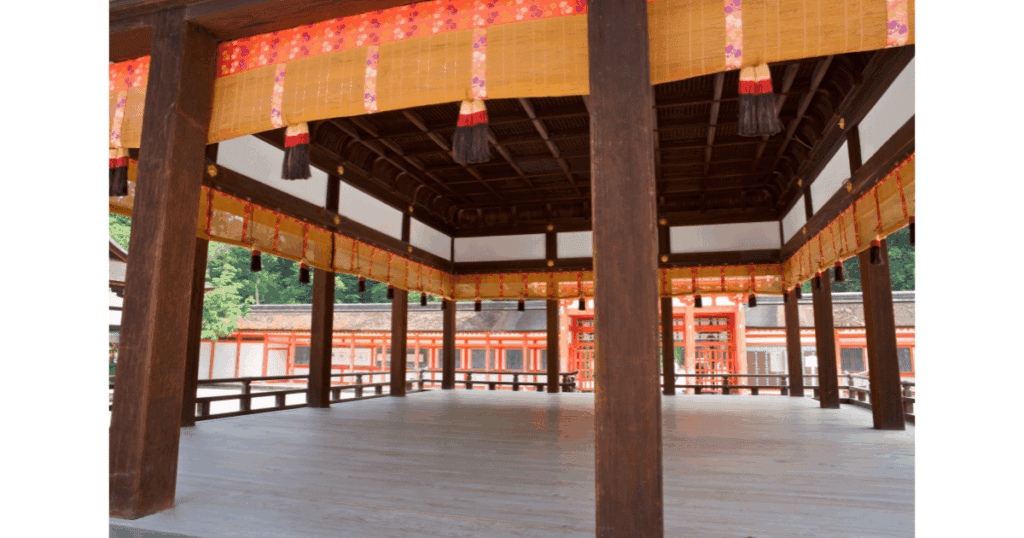
How to Watch Kagura
Where:
- Shrine festivals
- Seasonal rituals
- Tourist-friendly regular performances (e.g. Shimane Prefecture)
Tickets:
- Free at many festivals
- Paid reservations for scheduled performances
Final Thoughts from Curating Japan
You don’t need to understand every word.
You don’t need prior knowledge.
Japanese traditional performing arts are meant to be experienced, not decoded.
Even a single performance can change how you see Japan—
not just as a destination, but as a culture shaped by ritual, beauty, and human emotion.
If you are also interested in Ninja, read this.