When people visit a Japanese shrine for the first time, they often focus on one thing: how to pray correctly.
Where to bow, when to clap, how long to stand still.
That part matters—but it is only the beginning.
What many travelers don’t realize is that some of the most interesting experiences at Japanese shrines happen after you finish praying.
Pulling a paper fortune, writing a quiet wish, or choosing a small charm may look like simple souvenirs. In reality, these practices reflect how people in Japan interact with belief in everyday life.
This guide explains how to enjoy Japanese shrines beyond prayer—through omikuji, ema, and omamori—in a way that feels respectful, meaningful, and genuinely enjoyable.
Learn temple and shrine etiquette in Japan with this practical guide. Discover how to purify, pray, take photos respectfully, and enjoy goshuin, omamori, and festivals with confidence.

Omikuji
Fortune Slips, Not Just “Good” or “Bad”
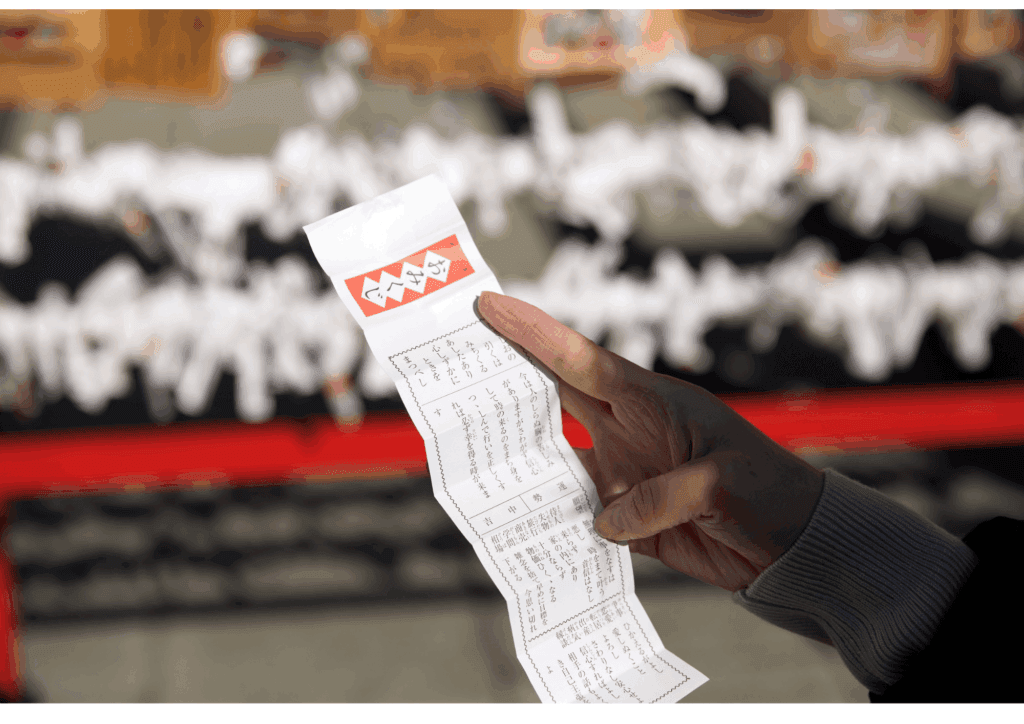
You will often see people unfolding small strips of paper at shrines and temples. These are omikuji, or written fortunes.
At famous places like Senso-ji, signs explain them in English. However, many other shrines offer little or no guidance, which can make the experience confusing.
Here is the key thing to know: omikuji are not meant to predict your entire future.
Instead, they comment on specific areas of life—such as health, relationships, work, or travel—at this particular moment. That is why even a “bad” fortune does not mean something terrible will happen.
If you receive a positive fortune, people usually keep it in their wallet or bag as a reminder.
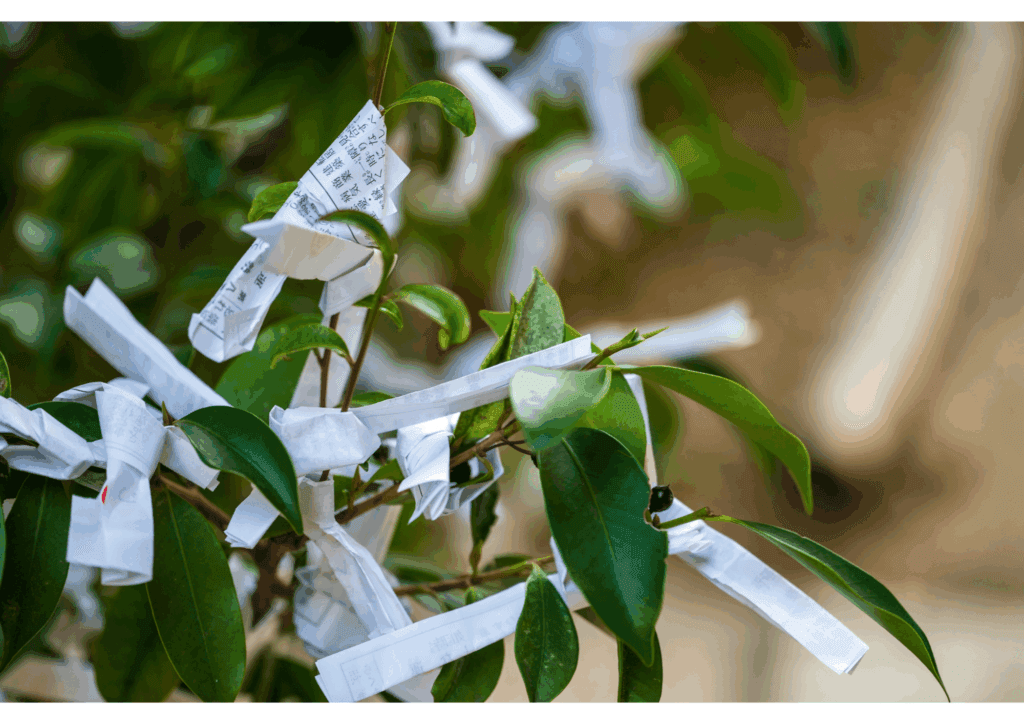
If you receive a negative one, you will often see visitors tie it to a designated rack or tree.
This gesture does not mean “rejecting fate.” Rather, it symbolizes letting go and starting fresh.
In other words, a bad fortune is not a failure—it is a reset.
Omikuji Fortune Levels Explained
Japanese omikuji use specific fortune levels that don’t map perfectly to English words like “good” or “bad.”
This table helps you understand what each result really means, in a way that makes sense culturally.
| Japanese | Reading | Simple Meaning | How to Understand It |
|---|---|---|---|
| 大吉 | Daikichi | Great blessing | Very good luck. Things are going smoothly right now—stay confident but don’t rush. |
| 中吉 | Chūkichi | Good blessing | Overall positive. Progress comes steadily with patience. |
| 小吉 | Shōkichi | Small blessing | Quietly good. Small wins matter more than big moves. |
| 吉 | Kichi | Blessing | Neutral-to-good. Nothing dramatic, but you’re on the right path. |
| 末吉 | Suekichi | Future blessing | Good things come later. Timing matters—wait and prepare. |
| 凶 | Kyō | Bad luck | A warning, not a curse. Slow down and be careful for now. |
| 大凶 | Daikyō | Very bad luck | Rare but symbolic. A strong reminder to reset and rethink your direction. |
Different shrines may use slightly different sets or wording.
However, the idea behind the rankings stays the same across Japan. So even if you forget the exact order, remembering this helps: Omikuji are guidance, not judgment.
Ema
Why People Leave Their Wishes Behind
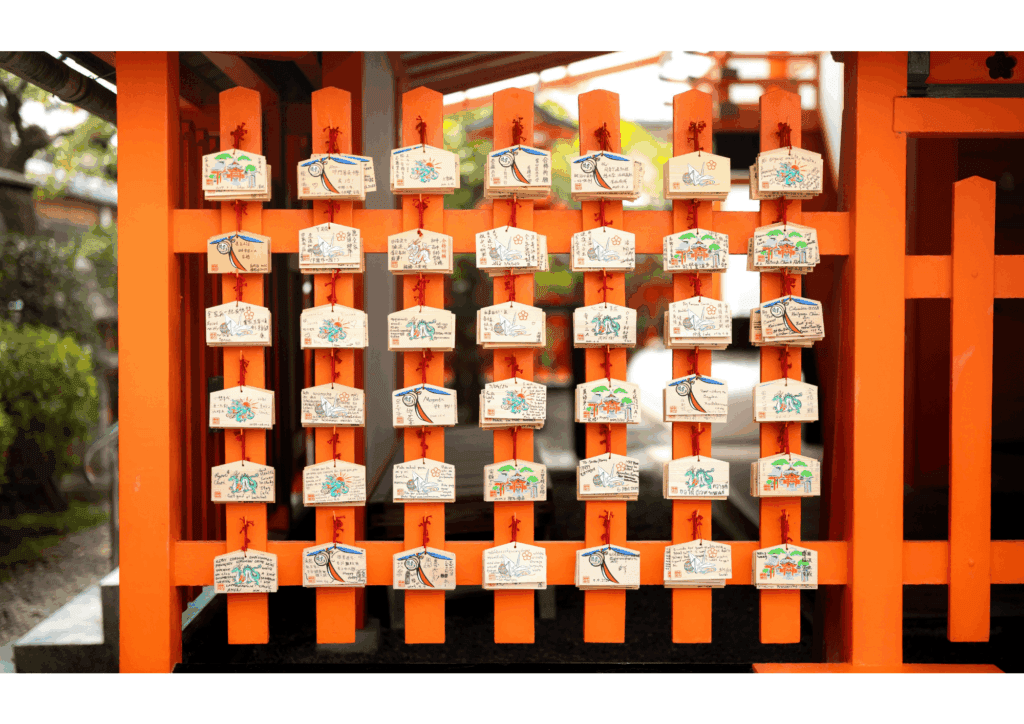
Small wooden plaques hanging at shrines are called ema.
At first glance, they look decorative. Once you read them, however, they feel surprisingly personal.
People write wishes for exams, health, love, family, and even very specific everyday hopes. Some include drawings. Others keep it simple with just a few words.
A common question travelers ask is: Who reads these wishes?
The simple answer is: they are meant for the deity enshrined there.
Shrine staff may collect and ritually burn them later, but they are not displayed for judgment or evaluation.
That means a few reassuring things:
- You can write in English.
- Your wish does not need to sound formal.
- Personal or emotional wishes are completely normal.
Many Japanese people feel shy writing wishes in front of others—and they do it anyway.
So if you feel hesitant, that feeling actually puts you closer to the local experience, not further away.
Omamori
What These Charms Actually Mean
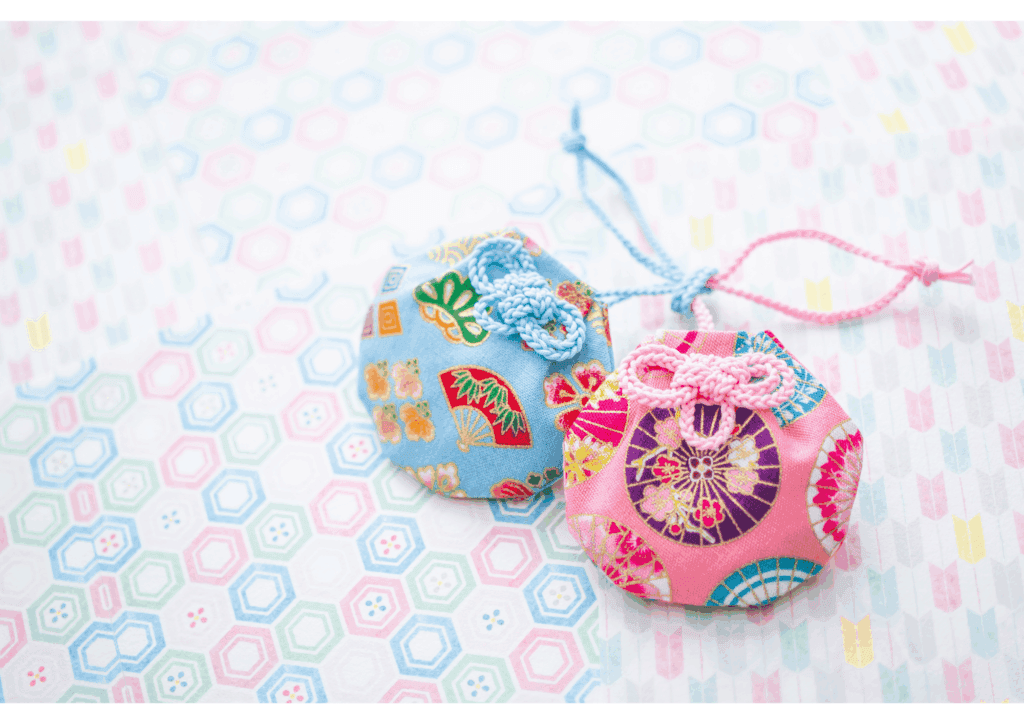
Colorful fabric charms sold at shrines are called omamori.
They often look similar, yet each one serves a different purpose.
Some protect health. Others focus on safe travel, academic success, relationships, or business. Visitors sometimes worry about choosing “the wrong one,” but this concern comes from misunderstanding the role of omamori.
Omamori do not demand exclusivity.
You can carry more than one, especially if they relate to different aspects of life.
Traditionally, people replace them after about a year, often returning them to a shrine for proper disposal. However, if you are visiting from abroad, it is perfectly fine to keep your omamori even after you leave Japan.
What matters is intention, not strict rules.
Think of an omamori less as a magical object and more as a physical reminder of care, hope, or protection.
Questions Travelers Often Hesitate to Ask
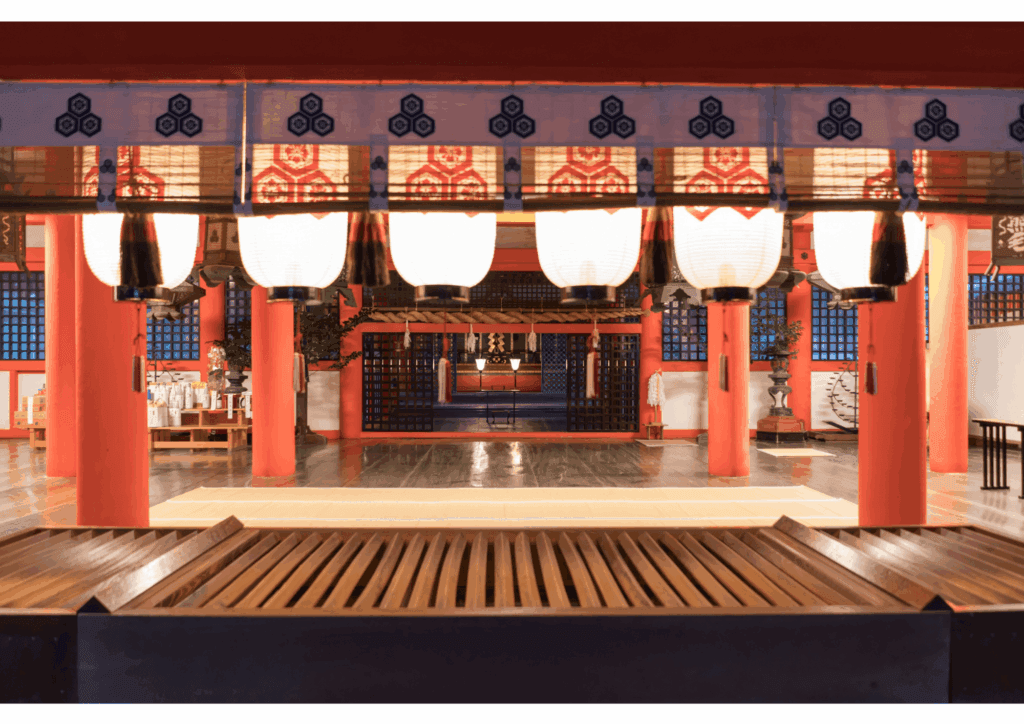
Many visitors worry about making mistakes at shrines. Fortunately, Japanese shrine culture is far more forgiving than it looks.
- You can buy charms without praying first.
- You can participate even if you are not religious.
- You can observe quietly without doing anything at all.
As long as you behave respectfully—keeping your voice low, avoiding disruptive photos, and following basic signs—you are already doing enough.
Participation is not a test. It is an invitation.
Why Every Shrine Feels Different
One reason shrines feel so memorable is that no two are exactly alike.
Some feel lively and social. Others feel deeply quiet.
Some specialize in academic success, while others attract visitors seeking healing or safe journeys.
This variety exists because shrines developed alongside local communities. Their atmosphere reflects history, geography, and the people who continue to visit them.
That is why there is no single “correct” way to enjoy a shrine.
Curiosity matters more than precision.
Final Thoughts
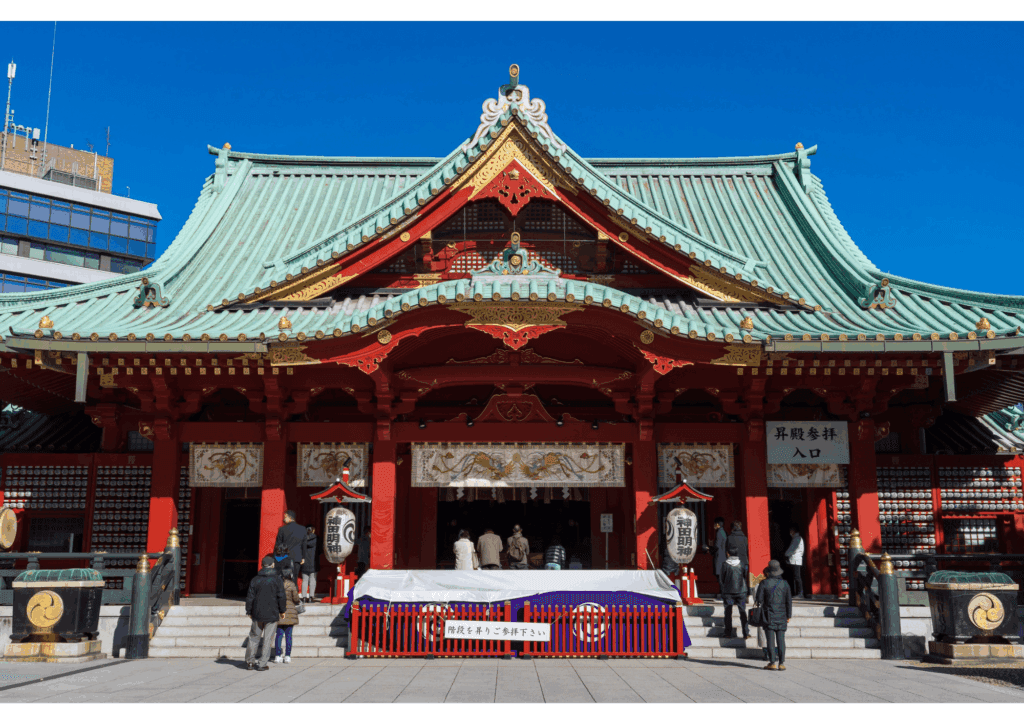
Many travelers worry about “doing things right” at Japanese shrines.
In reality, understanding the meaning behind the customs matters far more than perfect form.
When you draw a fortune, leave a wish, or carry a charm, you are not pretending to be someone else. You are simply joining a quiet conversation that has continued for centuries.
And that moment—small, thoughtful, and personal—is often what people remember most.