When you think of spring in Japan, one image comes to mind: cherry blossoms.
In this guide, we explain everything you need to know about Japan’s sakura in 2026 — including bloom forecasts, the three most famous ancient cherry trees, major viewing spots across the country, and the cultural meaning behind this beloved flower.
But first, why are cherry blossoms so special to Japanese people?
Why Are Japanese People Fascinated by Sakura?
“Mono no Aware” — The Beauty of Impermanence
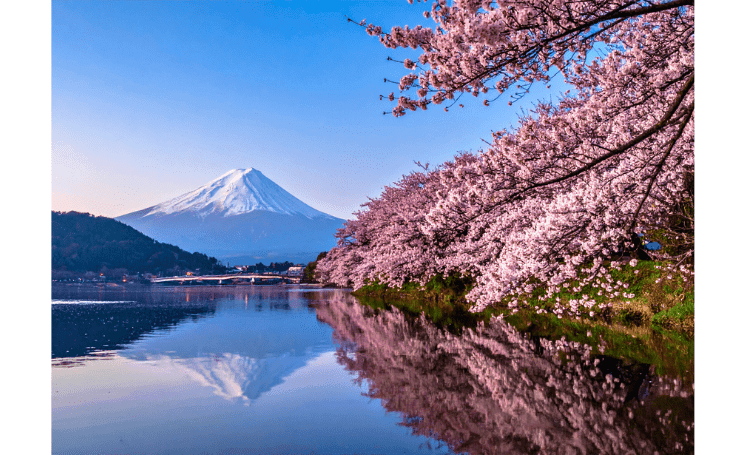
More than 1,000 years ago, during Japan’s Heian period (794–1185), people began to see cherry blossoms as a symbol of fleeting beauty.
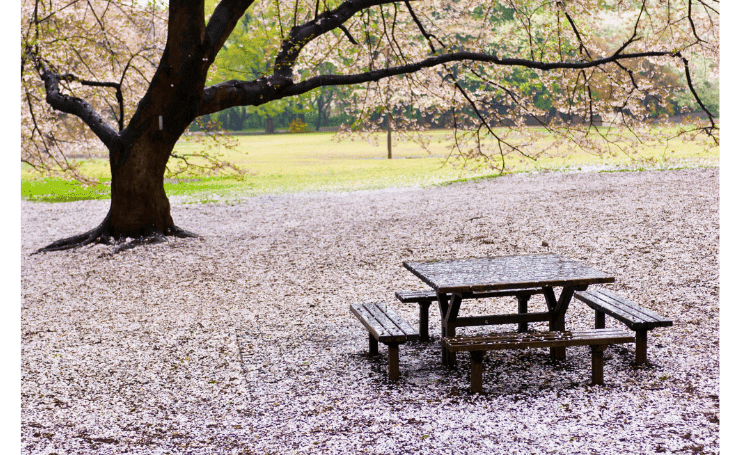
Instead of celebrating only the full bloom, they were deeply moved by the moment petals begin to fall.
This feeling is called “mono no aware”, which can be loosely translated as “the gentle sadness of things passing.”
In Japanese poetry and literature, cherry blossoms became a symbol of life’s impermanence.
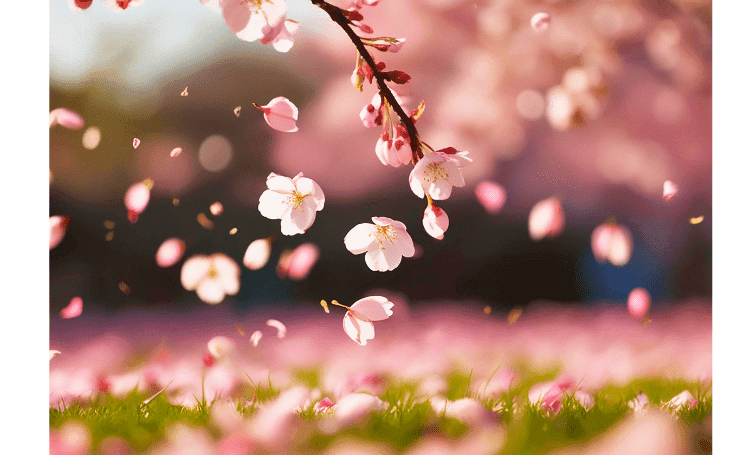
Even today, many Japanese people feel that blossoms are most beautiful not when they bloom — but when they scatter in the wind.
Samurai Spirit and Sakura
From the medieval era through modern times, cherry blossoms were often compared to the life of a samurai.
Just as petals fall quickly and gracefully, the ideal samurai life was seen as brief but honorable.
Later, during Japan’s modernization period, cherry blossoms were also used as a national symbol.
Throughout history, sakura has reflected changing values in Japanese society.
Sakura and Modern Life in Japan
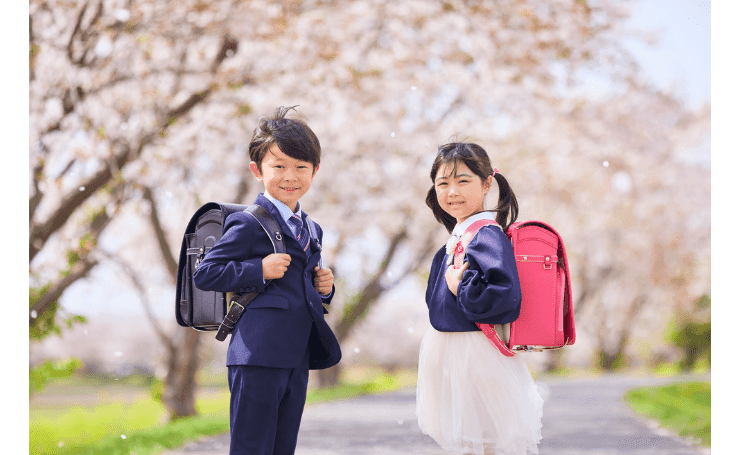
In Japan, the school and business year begins in April.
This means:
- School entrance ceremonies
- First days at new jobs
- Transfers to new cities
often happen during cherry blossom season.
Because of this, sakura is strongly connected to life transitions and new beginnings.
For many Japanese people, cherry blossoms are not just flowers to look at — they are flowers tied to personal memories.
The Evolution of Hanami (Flower Viewing)
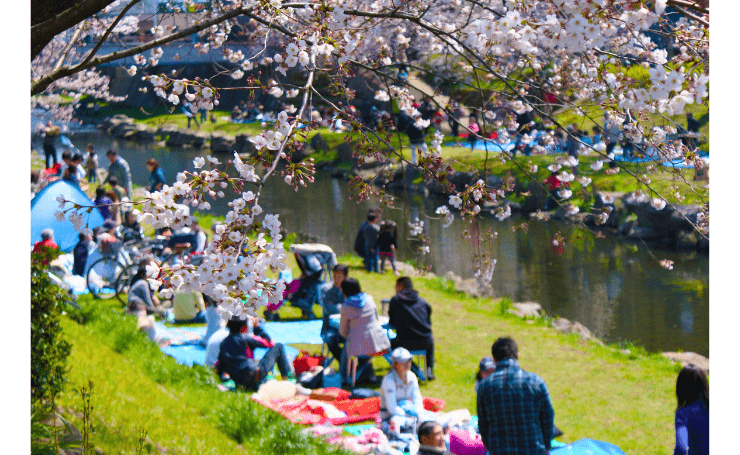
The custom of hanami, or cherry blossom viewing, became popular among ordinary people during the Edo period (1603–1868).
People gathered under blooming trees to welcome spring together.
Today, hanami can mean both quiet appreciation and lively gatherings — but at its core, it celebrates the arrival of spring.
Sakura Varieties and Historic Trees
Two Ways to Understand Cherry Blossoms in Japan
There are two important perspectives when learning about sakura:
- Varieties of cherry blossoms
- Historic, famous individual trees
Let’s start with the main varieties you’ll see across Japan.
Main varieties
Somei Yoshino
The most widely planted cherry blossom variety in Japan.
Its pale pink-to-white flowers bloom almost simultaneously, creating the iconic “sea of pink” seen in photos every spring.
Kanzan
A deep pink, multi-layered blossom.
These flowers are fuller and often bloom slightly later than Somei Yoshino.
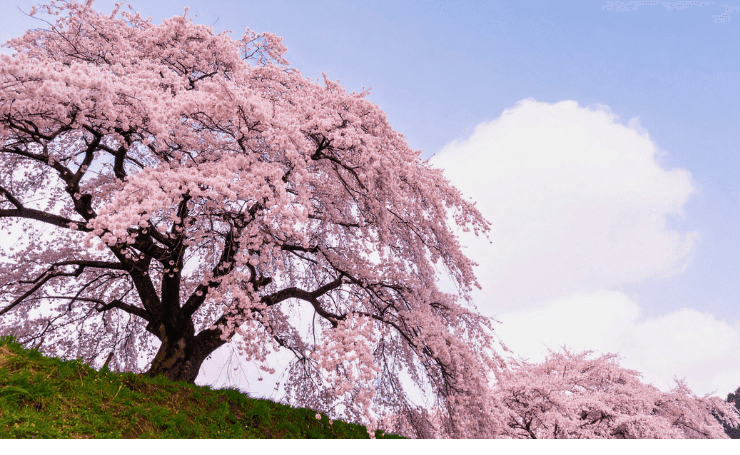
Weeping Cherry (Shidarezakura)
Recognizable by its long, hanging branches.
Especially beautiful when illuminated at night.
The Three Great Cherry Trees of Japan
Unlike varieties, these are specific ancient trees that have been protected for centuries.
They are known as the “Three Great Cherry Trees of Japan.”
Miharu Takizakura (Fukushima Prefecture)
Over 1,000 years old.
Its name means “waterfall cherry blossom,” inspired by the way its branches cascade downward.
Neodani Usuzumi Zakura (Gifu Prefecture)
Known for its subtle color change — from pale pink to almost grayish white.
An ancient tree of the Edo-higan species.
Jindai Zakura (Yamanashi Prefecture)
Believed to be nearly 2,000 years old.
One of the oldest surviving cherry trees in Japan.
Cherry blossoms bloom and fall every year.
But these trees have witnessed hundreds — even thousands — of springs.
2026 Cherry Blossom Forecast (Major Cities)
Cherry blossoms move northward across Japan each spring. This is known as the “sakura front.”
Here is the general 2026 bloom timeline:
- Okinawa (Okinawa Prefecture): Late January to February
- Nagoya (Aichi), Osaka (Osaka), Kyoto (Kyoto): Late March to early April
- Tokyo (Tokyo): Around March 20 (full bloom late March)
- Sendai (Miyagi), Hirosaki (Aomori): Early to mid-April
- Sapporo (Hokkaido): Late April to early May
Because Japan stretches far from south to north, you can follow cherry blossoms for nearly three months.
Major Cherry Blossom Viewing Spots in Japan
Here are some well-known places across different prefectures:
Philosopher’s Path (Kyoto Prefecture)
A canal-side walkway lined with cherry blossoms.
Chidorigafuchi (Tokyo)
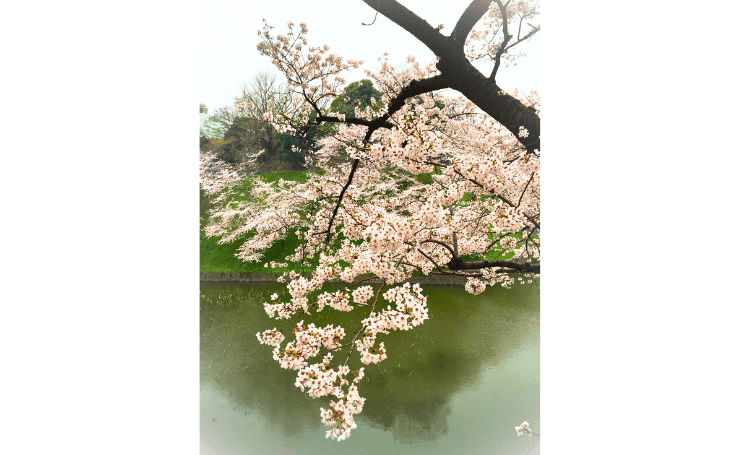
Famous for reflections of blossoms over the water and boat rides.Here are some well-known places across different prefectures:
Mount Yoshino (Nara Prefecture)
Entire mountainsides turn pink with thousands of trees.
Hirosaki Park (Aomori Prefecture)
Cherry blossoms surrounding a historic castle. Night illuminations are popular.
Garyu Park (Nagano Prefecture)
Blossoms reflected in a pond create picturesque scenes.
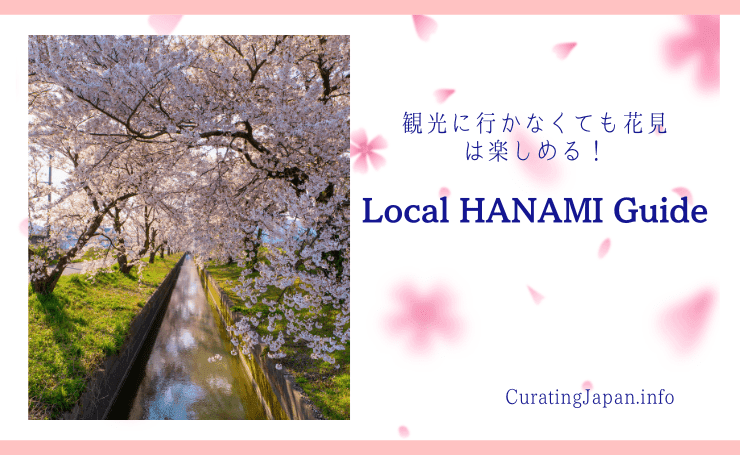
Cherry Blossoms Are Not Only Found at Famous Spots
In Japan, cherry blossoms are not limited to major tourist destinations.
You can often find them:
- In neighborhood parks
- Along rivers
- Around schools
- At local shrines
Japan’s spring exists not only in famous places, but also in everyday life.
If you would like to learn how to enjoy cherry blossoms beyond the tourist hotspots, read our companion article: “How to Enjoy Cherry Blossoms(HANAMI) in Japan Without Crowds.”
When traveling in Japan, just knowing a little Japanese can make your trip much more enjoyable and reassuring. This article is useful in such cases!

Frequently Asked Questions (FAQ)
How long does cherry blossom season last?
Full bloom usually lasts about one week. Weather can shorten or extend this period.
When will cherry blossoms bloom in 2026?
In Tokyo, blooms are expected around March 20. Kansai follows in late March, northern Japan in April, and Hokkaido in late April to early May.
Where are the Three Great Cherry Trees located?
- Miharu Takizakura (Fukushima Prefecture)
- Neodani Usuzumi Zakura (Gifu Prefecture)
- Yamataka Jindai Zakura (Yamanashi Prefecture)
Is it worth visiting on a rainy day?
Yes. Wet petals often appear deeper in color, and there are fewer crowds.