This article contains affiliate links (PR). We may earn a commission at no extra cost to you.
When a baby is born, the family may take the child to a Shinto shrine for omiyamairi.
When that child grows up and gets married, they may choose a white wedding dress and a chapel ceremony.
And when someone in the family dies, a Buddhist priest may conduct the funeral.
In Japan, this combination is not unusual.
But when we explain it to people from other countries, they sometimes ask:
“So are they Shinto, Christian, or Buddhist?”
Ask the Japanese person themselves, and they may simply say:
“I don’t really have a religion.”
They visit shrines. They visit Buddhist temples. They celebrate Christmas. Yet many do not consider themselves followers of any particular religion.
Why?
Looking at religion in everyday Japanese life helps explain this apparent contradiction.

- Many People in Japan Do Not Belong to a Particular Religion
- Yet Japan Has More “Religious Adherents” Than People
- Shrines and Temples Were Not Always Separate
- Why Are Babies Taken to Shinto Shrines?
- Why Do So Many Couples Choose a Chapel Wedding?
- Buddhism and the End of Life
- Why Can Non-Believers Take Part in Religious Rituals?
- Christmas and Halloween Have Little Religious Meaning for Many People in Japan
- Are Japanese People Simply “Religiously Tolerant”?
- Summary
- Sources and References
Many People in Japan Do Not Belong to a Particular Religion
Let’s start with an interesting number.
According to an international survey conducted by the Pew Research Center in 2024, 55% of adults in Japan were religiously unaffiliated.
In the same survey, only 7% said religion was very important in their lives.
From those figures alone, it might seem that religion plays very little part in Japanese life.
But everyday life tells a slightly different story.
People pray at shrines.
They visit family graves and remember their ancestors.
They take part in Obon traditions.
They make their first shrine or temple visit of the year at hatsumode.
Even people who say, “I don’t really have a religion,” may take part naturally in customs with religious origins.

Yet Japan Has More “Religious Adherents” Than People
Here is another surprising number.
According to the 2025 edition of Japan’s Religious Yearbook, published by the Agency for Cultural Affairs, religious organizations reported a total of 175,054,047 adherents as of the end of December 2024.
This included approximately 86.36 million associated with Shinto organizations, 80.46 million with Buddhist organizations, and 1.87 million with Christian organizations.
Japan’s total population in October 2024, however, was only about 123.8 million.
So the number of religious adherents reported by religious organizations exceeds the population by more than 50 million.
Of course, this does not mean that the average Japanese person actively practices several religions.
Different religious organizations count adherents in different ways.
For example, someone may be counted as part of the community of a local Shinto shrine while their family is also connected to a Buddhist temple.
Many people say they do not belong to a particular religion, while the combined figures reported by religious organizations exceed the population.
That apparent contradiction says a lot about the relationship between religion and everyday life in Japan.
For Many Japanese People, the Occasion Matters More Than the Religious Label
Religious traditions appear throughout Japanese life.
A new baby may have an omiyamairi.
Children celebrate Shichi-Go-San.
People go for hatsumode at New Year.
Families visit graves during Obon.
But most people do not stop each time and think:
“This is a Shinto event.”
or
“Today I am doing something Buddhist.”
The thinking is often much simpler.
“We had a baby, so we’re going for omiyamairi.”
“It’s the year for Shichi-Go-San.”
“It’s New Year, so we’re going for hatsumode.”
Hatsumode is a particularly good example.
It is often introduced overseas as the first Shinto shrine visit of the year, but Japanese people also visit Buddhist temples.
Some visit a shrine. Some visit a temple. Some visit both.
Famous Buddhist temples such as Senso-ji in Tokyo, Naritasan Shinshoji in Chiba, and Kawasaki Daishi in Kanagawa attract huge numbers of visitors at New Year.
For many people, it is less about choosing between Shinto and Buddhism and more about marking the beginning of a new year.“It’s New Year, so we’re going for hatsumode.”

Shrines and Temples Were Not Always Separate
Japan’s religious history also helps explain this way of thinking.
Since ancient times, people in Japan have worshipped kami—sacred beings or presences associated with nature, particular places, communities, and ancestors.
Buddhism arrived in Japan from the Asian continent around the sixth century.
But Buddhism did not replace the worship of kami.
Instead, the two traditions gradually became closely connected.
This is known as shinbutsu-shūgō, the blending of Shinto and Buddhism.
Buddhist temples were sometimes built within or beside shrine complexes. Kami could also be worshipped within Buddhist temple grounds.
Over time, ideas developed that connected Japanese kami with Buddhist figures.
For many centuries, the relationship was therefore not simply:
“Choose either Shinto or Buddhism.”
This long history is one reason the difference between a shrine and a temple can sometimes be confusing.
Foreign visitors are not the only ones who occasionally have trouble telling them apart. Japanese visitors can be unsure too, especially at places with a long history.
The relationship changed dramatically during the Meiji period.
Beginning in 1868, the new government introduced a policy known as shinbutsu bunri, separating Shinto and Buddhism.
This helped trigger anti-Buddhist movements known as haibutsu kishaku. In some parts of Japan, temples were closed and Buddhist statues and other religious objects were destroyed.
This greatly changed a relationship between kami worship and Buddhism that had existed for centuries.
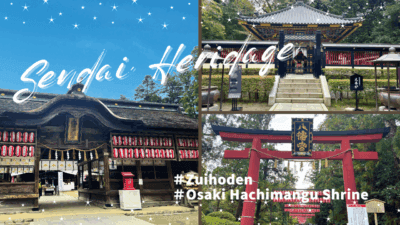
With its torii gates and the name “Inari,” Toyokawa Inari is often mistaken for a Shinto shrine—but it is actually a Buddhist temple. It is a fascinating example of the long and complex relationship between Shinto and Buddhism in Japan. For more details, please check our Tokyokawa Inari article.

Why Are Babies Taken to Shinto Shrines?
Birth and childhood are still strongly associated with Shinto shrines in Japan.
One of the best-known customs is omiyamairi, a baby’s first shrine visit.
Traditionally, a baby is taken to a shrine around one month after birth. The family reports the child’s birth to the kami and prays for healthy growth.
Later, at around the ages of three, five, and seven, children celebrate Shichi-Go-San.
In autumn, it is common to see children dressed in kimono or formal clothing visiting shrines with their families.
Some Buddhist temples also hold prayers for babies and Shichi-Go-San celebrations, but these traditions remain strongly associated with Shinto shrines.
And the families taking part do not necessarily think of themselves as Shinto believers.
For many, they are simply family traditions marking a child’s birth and growth.

Shichi-Go-San is another important Japanese life event closely associated with Shinto shrines, celebrating the growth of children. Learn more about its history, customs, clothing, and shrine visits in our complete guide.

Why Do So Many Couples Choose a Chapel Wedding?
A child who was taken to a Shinto shrine for omiyamairi may grow up and choose a chapel wedding.
And this is far from rare.
According to the Zexy Wedding Trend Survey 2024, among couples who held a wedding ceremony, 46.9% chose a Christian-style ceremony.
This compared with 36.7% choosing a non-religious ceremony, 15.2% a Shinto-style ceremony, and 0.4% a Buddhist ceremony.
Christian-style weddings were therefore the most commonly chosen ceremony type in the survey.
Of course, Japan has Christian communities.
But not everyone who chooses a Christian-style wedding is Christian.
Some people simply want to wear a white wedding dress.
They may want to walk down an aisle.
They may like the exchange of rings and other elements associated with a Western-style wedding.
In other words, the Christian-style ceremony is also widely accepted as a wedding style.

Buddhism and the End of Life
When it comes to funerals and ancestor memorials, Buddhism traditionally plays a much larger role.
A Buddhist priest may chant sutras while mourners offer incense.
Families may later hold memorial services on the 49th day after death and on later anniversaries.
This connection between Buddhism, families, graves, and funerals also has historical roots.
During the Edo period, Christianity was prohibited, and households became closely connected with Buddhist temples.
Under the terauke system, temples certified that local residents were not Christians.
Over time, temples also became closely connected with family graves, funerals, and ancestor memorials.
Today, Japanese families have more options, including funerals without religious ceremonies.
Even so, someone who did not consider themselves a devout Buddhist during life may still receive a Buddhist funeral because of family tradition or a longstanding relationship with a family temple.

Why Can Non-Believers Take Part in Religious Rituals?
This raises another question.
Why can someone who does not consider themselves Shinto take a baby for omiyamairi?
Why can someone who did not strongly identify as Buddhist receive a Buddhist funeral?
And why can a non-Christian couple choose a Christian-style wedding?
At Shinto shrines, people do not normally need to formally convert to Shinto before requesting prayers for omiyamairi, Shichi-Go-San, or other occasions.
They can simply apply for the appropriate prayer or blessing.
Buddhism is more complicated because customs vary by sect, temple, and family.
But in Japan, someone who did not strongly identify as Buddhist may still receive a Buddhist funeral because of their family’s Buddhist tradition or relationship with a temple.
Christian-style weddings are different again.
Many wedding chapels in Japanese hotels and wedding venues are not the same as churches in the religious sense.
Non-Christian couples can therefore choose a Christian-style ceremony there without becoming Christians.
An actual wedding in a Christian church is different. Requirements depend on the denomination and individual church, and couples may need to consult the church in advance or attend marriage preparation classes.
So shrines, Buddhist temples, and Christian churches all work differently.
But in Japan, a person does not always need to strongly identify as a follower of a religion in order to take part in a ceremony associated with it.
This is another reason traditions from several religions can exist comfortably within everyday Japanese life.

Christmas and Halloween Have Little Religious Meaning for Many People in Japan
The same pattern can be seen in celebrations that originally came from overseas.
Christmas is an obvious example.
By December, Japanese cities are filled with Christmas trees and illuminations.
Families may eat Christmas cake, children receive presents, and couples may go out for dinner.
But most people celebrating Christmas in Japan are not Christians.
And unlike in many Christian communities overseas, going to church for Christmas services is not a common part of Christmas celebrations for the wider Japanese population.
Christians in Japan may of course attend Christmas services, but for many other people, Christmas is about cakes, presents, illuminations, family time, or dates.
It is mainly a seasonal event.
Halloween has developed in a similar way.
People wear costumes, visit theme parks, join events, and buy Halloween-themed sweets and products.
For most participants, it is not a religious observance.
It is an autumn event.
The Japanese year-end calendar shows this especially clearly.
Until December 25: Christmas.
December 31: Buddhist temple bells for Joya no Kane.
After midnight: hatsumode at a Shinto shrine or Buddhist temple.
Some people visit both.
Most are not choosing a new religion each time.
They are celebrating Christmas, New Year’s Eve, and New Year as separate seasonal traditions.

While Christmas and Halloween are closely tied to religion and local traditions in many countries, in Japan they have developed into seasonal events with their own distinctive customs. These articles explain how the Japanese versions differ from those celebrated overseas.

Are Japanese People Simply “Religiously Tolerant”?
It can be tempting to explain all of this by saying:
“Japanese people are tolerant of different religions.”
There is some truth in the idea that many people in Japan are comfortable taking part in traditions from different religions.
But Japan has not always been tolerant of every religion.
Christianity was severely suppressed during the Edo period.
In the early Meiji period, the separation of Shinto and Buddhism helped trigger haibutsu kishaku, which led to the closure of temples and destruction of Buddhist objects in some areas.
So “religious tolerance” alone does not explain Japanese attitudes toward religion.
For centuries, traditions connected with Shinto and Buddhism have been part of everyday life. Later, customs with Christian origins—including Western-style weddings and Christmas—were also adopted in distinctly Japanese ways.
Today, traditions originating in several religions can exist within a single person’s life without seeming unusual.

Summary
It is sometimes said:
“Japanese people have no religion.”
Certainly, many people in Japan do not identify themselves as followers of a particular religion.
But that statement alone does not fully explain the relationship between Japanese people and religion.
So why do Japanese people take babies to Shinto shrines, marry in chapels, and hold Buddhist funerals?
There is no single answer.
For many people in Japan, however, what matters is less about deciding whether an occasion belongs to Shinto, Buddhism, or Christianity and more about properly marking the important stages of life and the seasons of the year.
Seen in that context, Japan’s seemingly unusual relationship with religion becomes much easier to understand.
🗾 Plan Your Trip to Japan
Everything you need — sorted before you land.
Sources and References
- Pew Research Center, “Religious Importance and Religious Affiliation”
https://www.pewresearch.org/religion/2025/05/06/religious-importance-and-religious-affiliation - Agency for Cultural Affairs, Religious Yearbook 2025
https://www.bunka.go.jp/tokei_hakusho_shuppan/hakusho_nenjihokokusho/shukyo_nenkan/pdf/r07nenkan.pdf - Statistics Bureau of Japan, Current Population Estimates as of October 1, 2024
https://www.stat.go.jp/english/data/jinsui/2024np - Recruit Co., Ltd., Zexy Wedding Trend Survey 2024
https://zexy.net/article/app002508018