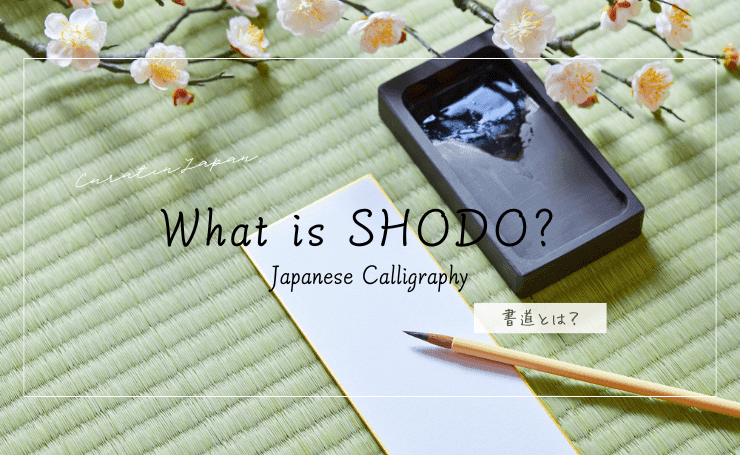
Japanese calligraphy—Shodō (書道)—is the culture of writing with a brush and ink.
It can be appreciated as art, practiced as a skill, and encountered in everyday life: on New Year’s calligraphy, a name written on a gift envelope, or a guestbook at a museum.
This guide is for anyone who wants to understand shodō from the ground up: how Japanese writing works, what shodō is, the essential tools, shosha in schools, kakizome (first writing of the year), and where brush writing appears in daily life.

How did Japanese writing develop?
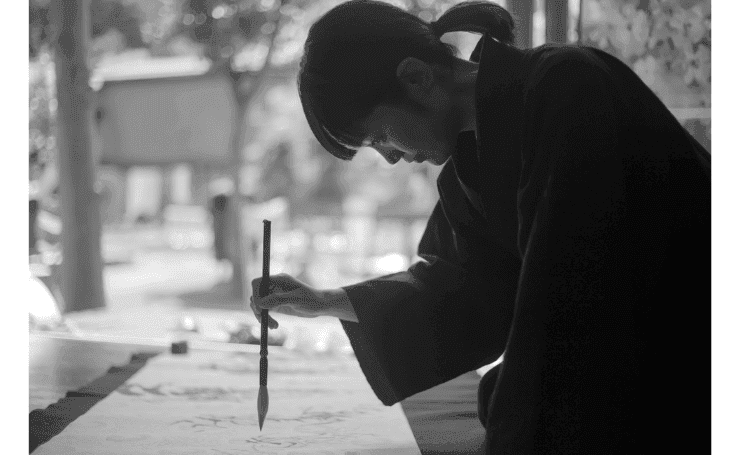
Written Japanese uses a mix of scripts—kanji plus kana (hiragana and katakana)—and that combined style has become the standard way Japanese is written.
Because there are multiple script types working together, Japanese can feel “hard at first” when you begin learning to read and write.
What is Shodō?
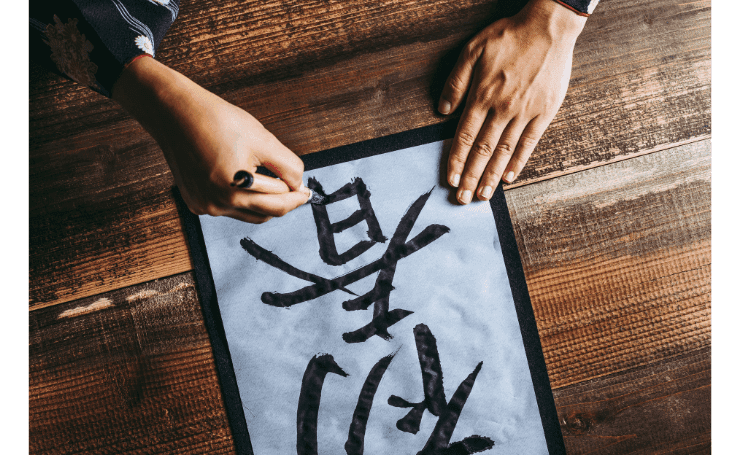
Shodō is brush writing with ink—simple in form, but surprisingly deep in feel.
It’s not only about “neat handwriting.” The pressure of the brush, the rhythm of strokes, and the space around the characters all shape the final impression.
Historically, Japanese writing culture developed with strong roots in Chinese characters (kanji), and shodō grew as a cultural practice alongside writing itself.
Basic Shodō tools
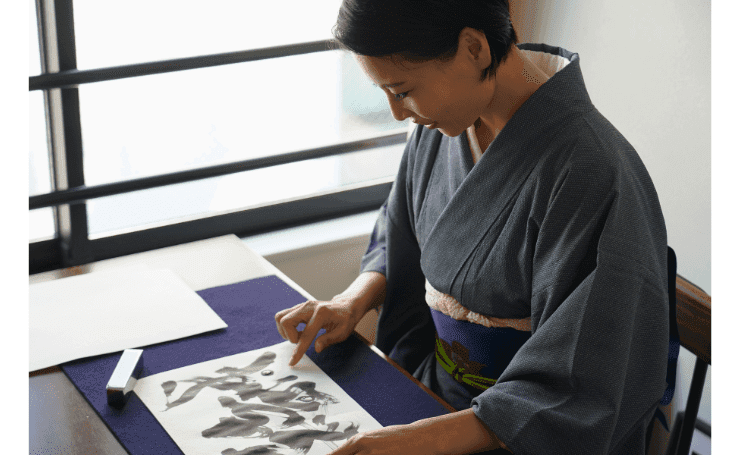
You only need a few basics: brush, ink, inkstone, and paper.
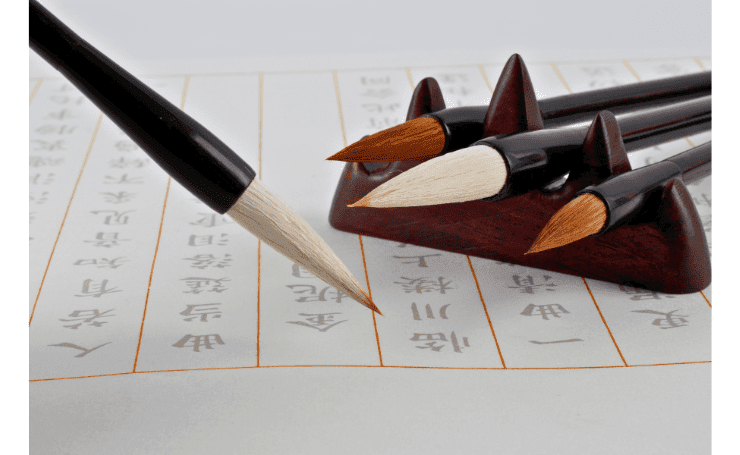
Brush (fude)
Brushes come in many thicknesses depending on what you’re writing.
Traditionally, brush hair often uses materials such as sheep, horse, or weasel hair, and handles are commonly made from bamboo or wood.
If animal-hair brushes aren’t for you, that’s okay—there are also synthetic-fiber brushes, and for everyday “brush-style” writing, a brush pen is an easy alternative.
Ink (sumi / bokujū)
The black color in sumi ink comes from soot, and traditional inksticks are commonly described as being made with soot plus nikawa (animal glue), sometimes with fragrance.
- Ink liquid (bokujū / sumi ink in a bottle): quick and convenient
- Inkstick + inkstone: you grind the ink yourself; many people love the slower pace and the ritual
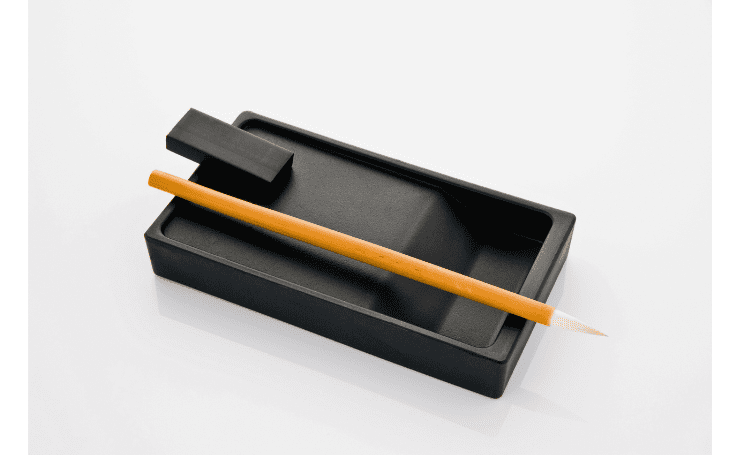
Inkstone (suzuri)
An inkstone is used to grind an inkstick with water to make ink. It’s part tool, part tradition—especially if you enjoy the “quiet preparation” before writing.
Paper (hanshi)
Hanshi is a standard calligraphy paper. Depending on the type, it can be made from a range of fibers—some are more traditional (including Japanese papermaking fibers like kōzo, mitsumata, and gampi), while many everyday/learning papers use pulp blends.
Paper choice matters because it changes how ink bleeds, spreads, and textures.
Helpful extras
- Felt mat (shitajiki) to protect the desk and improve brush movement
- Paperweight (bunchin) to keep paper steady
- Brush rest (fudeoki) to avoid staining
Shosha in Japanese schools (and how it relates to shodō)
Many Japanese people first meet brush writing at school.
In school, the subject area called shosha (書写) includes learning to write characters with good balance and form. Japan’s national curriculum guidance specifies that brush-based shosha instruction is taught from Grade 3 and up, and also emphasizes the relationship with kōhitsu (pencil/pen writing).
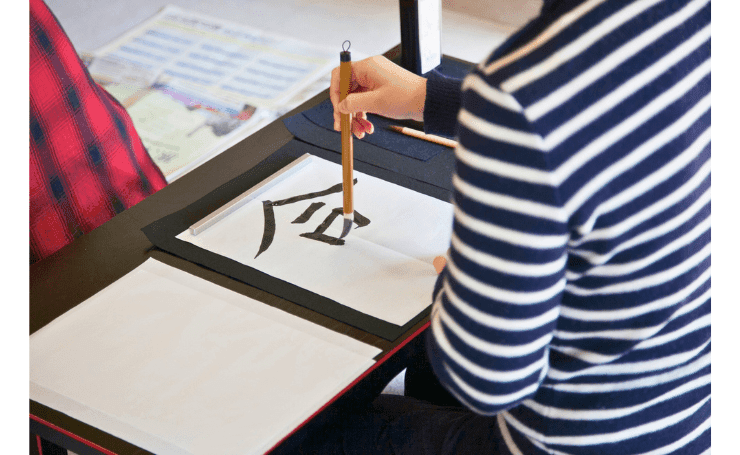
A useful way to think about it:
- Shodō leans toward writing as expression and appreciation
- Shosha focuses first on readable, well-formed writing as a practical skill
And outside of school, many communities have calligraphy classes (often called shūji / “writing lessons”), which is one reason brush writing remains familiar to many people in Japan.
Kakizome: the first writing of the year
Kakizome (書き初め) literally means “the first writing of the year.” It refers to the New Year custom of using a brush and ink to write for the first time—often a word for good luck, a personal resolution, or a seasonal phrase.
Today, kakizome is strongly associated with schools. In many places, students do it as a winter-break assignment or in class soon after the break, and schools may display the works or hold small contests.
In practice, it’s often done on larger paper than usual, and the focus is less on “perfect art” and more on starting the year with intention and good form.
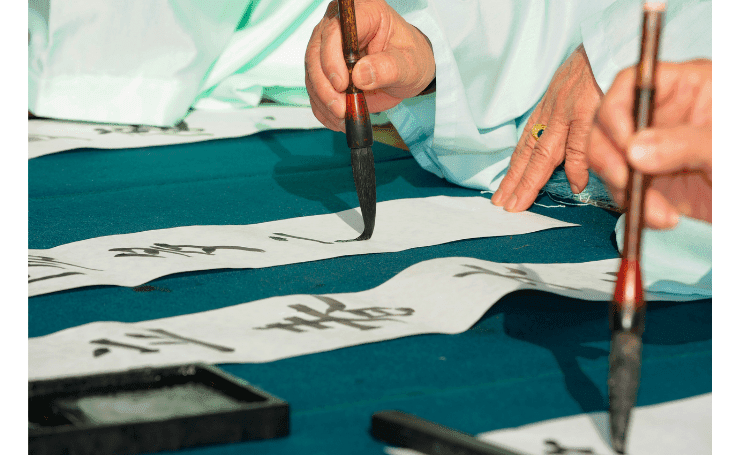
Brush writing in everyday life
Even if you don’t “do shodō,” brush writing appears in small, familiar places:
- Signing a guestbook (museum / exhibition)
- Writing names on gift envelopes (noshi-bukuro)
- Adding a handwritten line on a New Year’s card
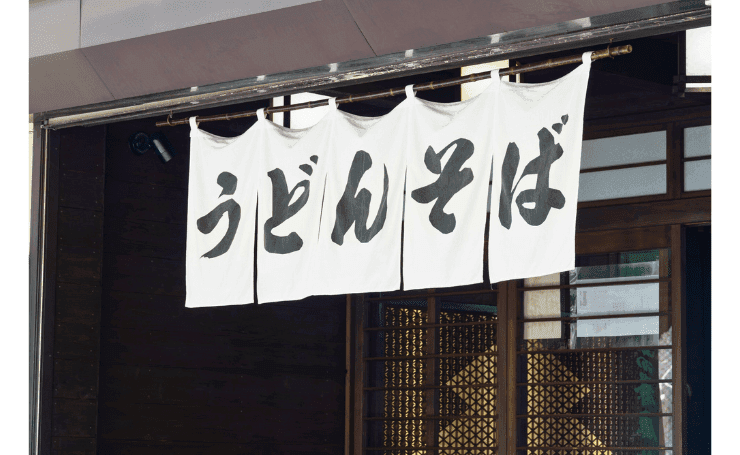
- Seeing brush-style lettering on shop signs and menus
Once you notice it, you start seeing how characters can carry not only meaning—but also mood and warmth.
How to try shodō
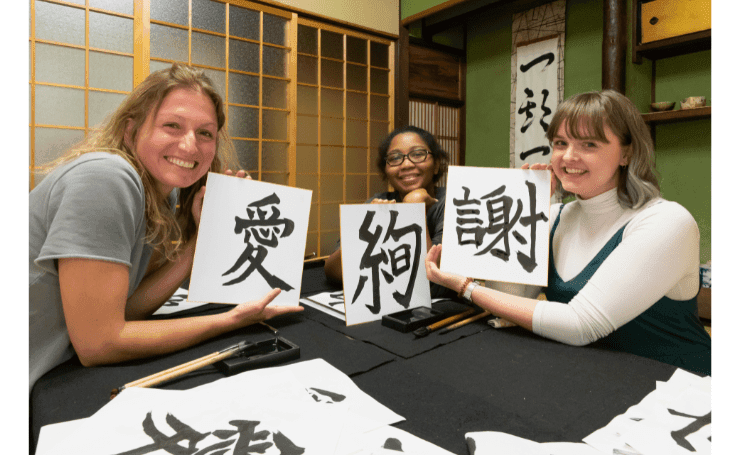
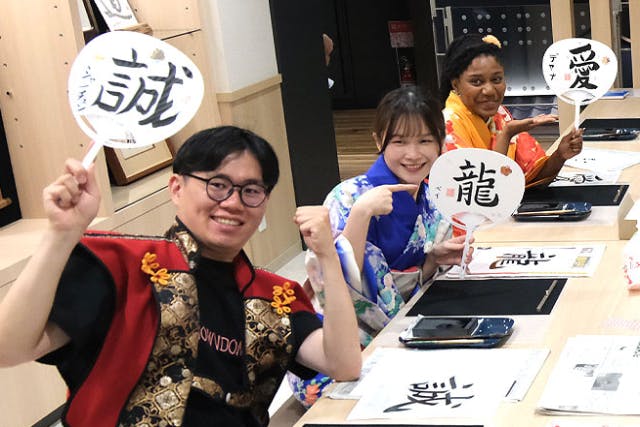
If you ever want to try shodō, beginner sessions usually start with tool basics, a little stroke practice, then writing a short phrase or a single character you like.
When choosing a class, these help:
- Duration: 60–90 minutes is easy to fit in
- Format: “guided explanation” tends to be more satisfying than pure practice
- Take-home: some workshops let you write on a fan, card, or small art paper

Summary
Shodō is the culture of writing with a brush—where strokes, spacing, and pace matter as much as the character itself.
It can be enjoyed as art, understood through school-based shosha, and found quietly in everyday Japanese life.
If you ever get the chance, trying it once can make the culture feel more tangible—without needing to become “good at it.”
Click here for an article on cultural experiences you can have in Japan.